What Washing Is For
A cast component can come out of a silicone mold with release agent still on the surface. The Games Workshop guide to building resin models does not claim that every part carries a film. Its instruction on page 3 is to clean each part so that any excess mold release agent still on the surface comes off, because any release agent left on the model may prevent the primer adhering to it.
That is the whole case for the step, and it is also its limit: the wash removes a manufacturing residue that may be in the way of the primer. It does not polish the surface, sharpen detail, or make an old casting new.
The Method the Guide Gives
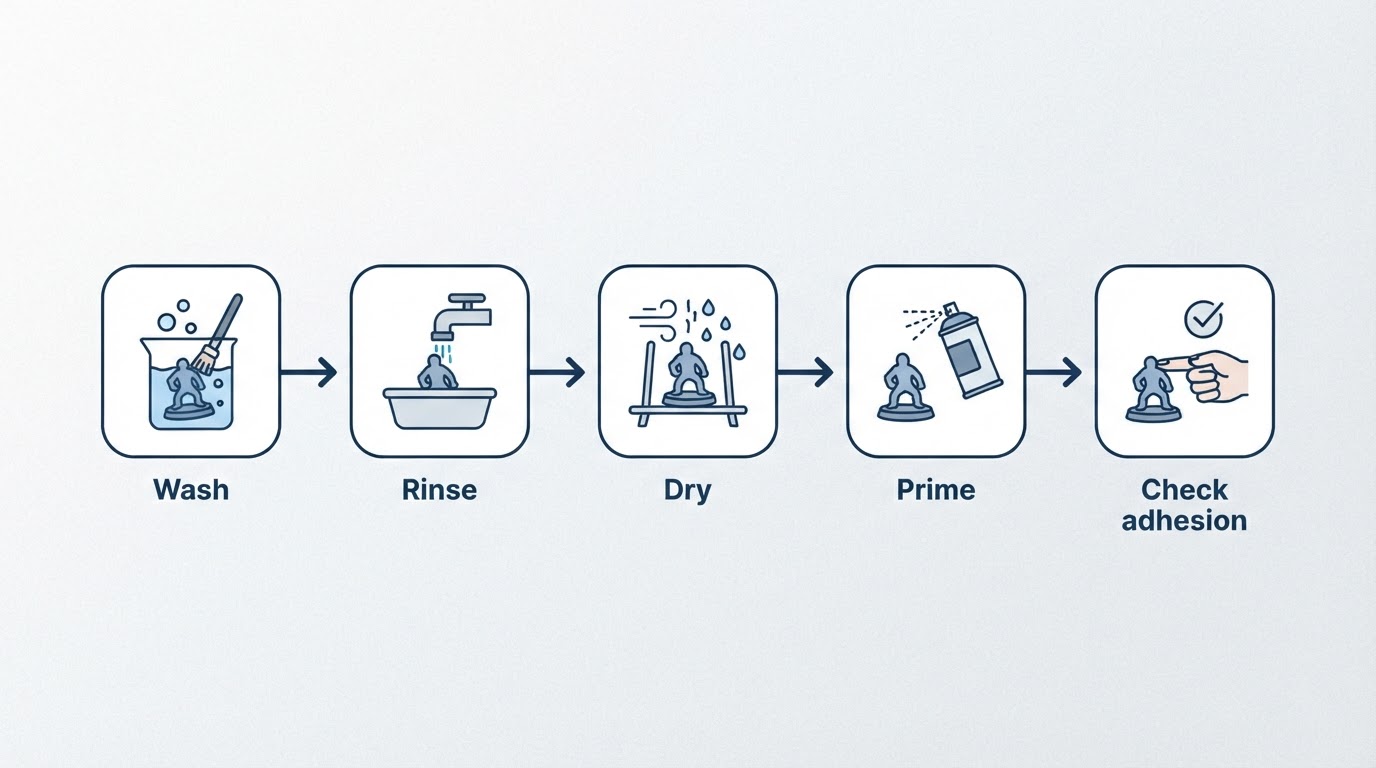
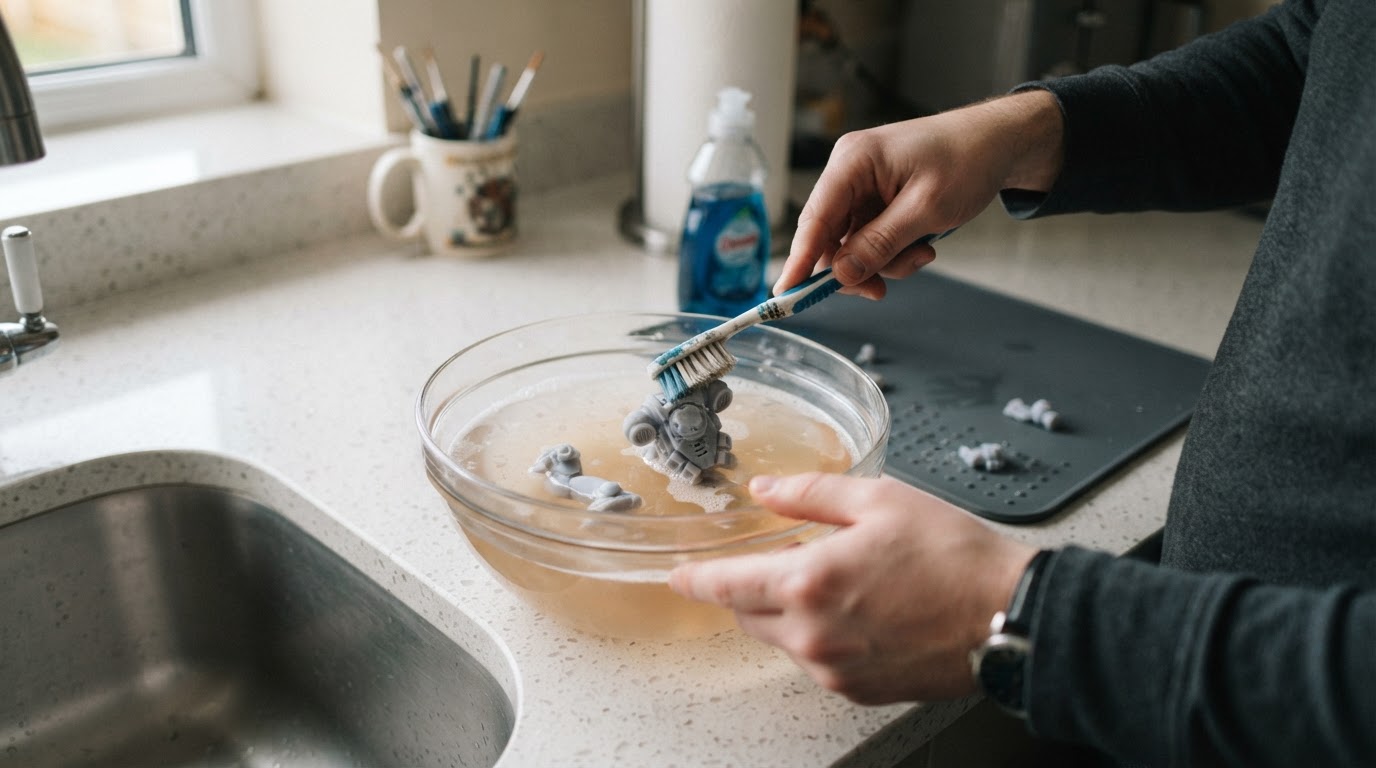
Page 3 names warm water, a good degreasing agent such as dishwashing liquid, and an old toothbrush. Work through the sequence in that order, with the parts in front of you.
- Follow the kit maker's guidance first. If the kit's own instructions name a cleaner, a water temperature or a drying step, those take precedence over anything below.
- Set up warm water with dishwashing liquid. The guide names a degreasing agent and stops there: no ratio, no soak time, no number for the temperature beyond warm. Mix it by eye rather than inventing a concentration or a timer.
- Keep the water warm, not near-boiling. Warm is the word the guide uses. Hotter water is not a stronger wash, and near-boiling water is a risk to thin parts.
- Use a clean, soft-bristled brush. The guide says an old toothbrush, but an old one is not guaranteed to be soft, and a stiff brush can press detail flat or crack a delicate section. Support thin parts — ankles, weapons, cloaks — so they are not carrying the pressure, and let the bristles work the recesses.
- Rinse until the suds are gone. The residue has to leave with the soap. Run clean water through joins, undercuts and hollows until no suds come out.
- Dry every recess before primer. Water sits in gaps where two components meet, and a part that looks dry on the face can still be holding water inside. Give it time with air moving around it, then follow the primer's own directions for the surface it wants.
Fresh UV Prints Are a Different Job
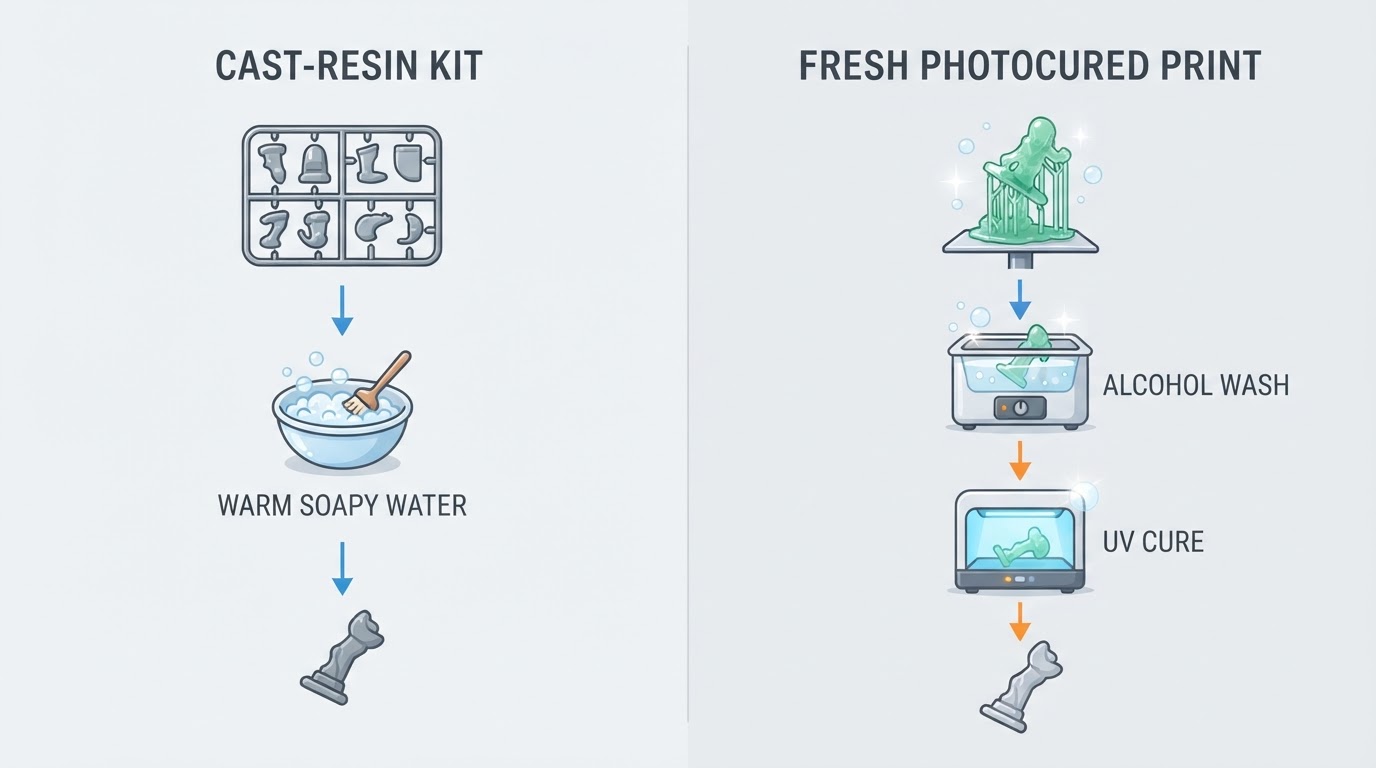
The sequence above is for cast-resin kits. A photopolymer print comes off a resin printer carrying uncured liquid resin, and how that is cleaned, which wash chemistry suits it and how it is post-cured all follow the exact resin and printer maker's instructions. Water-washable resin is different again, and dish soap and warm water from a cast-kit guide are no substitute for any of it.
If someone else printed and finished the model, do not assume its wash and cure were done properly — confirm with the supplier before you prime it. Exposure time for a print is a separate question, covered in the guide to how long to cure resin miniatures.
Check the Dried Primer for Adhesion
Page 4 of the guide adds the check that comes after priming: once the primer has dried, check that it has covered and adhered to the model. If the primer has peeled away from some areas, contact the maker's customer service for advice on how to resolve it.
That is the only check the guide gives, and it is made on the dried coat rather than at the sink. An even coat is not proof that a film was removed, or that the wash is what made the primer stick — it tells you the primer adhered that time. If the coat peeled, the useful next step is the maker's advice plus a close look at the primer and the conditions you applied it in, not a longer soak.