One Nerdy Dad is supported by our audience. When you purchase through links on our site, we may earn a small affiliate commission at no extra cost to you.

Airbrush Cleaner for Miniature Painting: Dedicated Solutions vs. Isopropyl Alcohol

The Science of Cleaning

Why Acrylic Paint Is Harder to Clean From an Airbrush Than You Might Think

Acrylic miniature paints are water-activated polymers. When they dry inside your airbrush — along the needle, inside the nozzle, or around the crown cap — they form a flexible plastic film that water alone cannot redissolve.

Unlike oil-based or enamel residues, which respond to their own solvents, dried acrylic residue usually needs more than water. The appropriate cleaner depends on the paint line and on what the airbrush maker permits for its seals, needle, and nozzle.

The visible result is tip dry: a chalky buildup that disrupts paint flow and changes your pressure response mid-stroke. Regular cleaning with a cleaner suited to the paint is the main way to keep it under control.
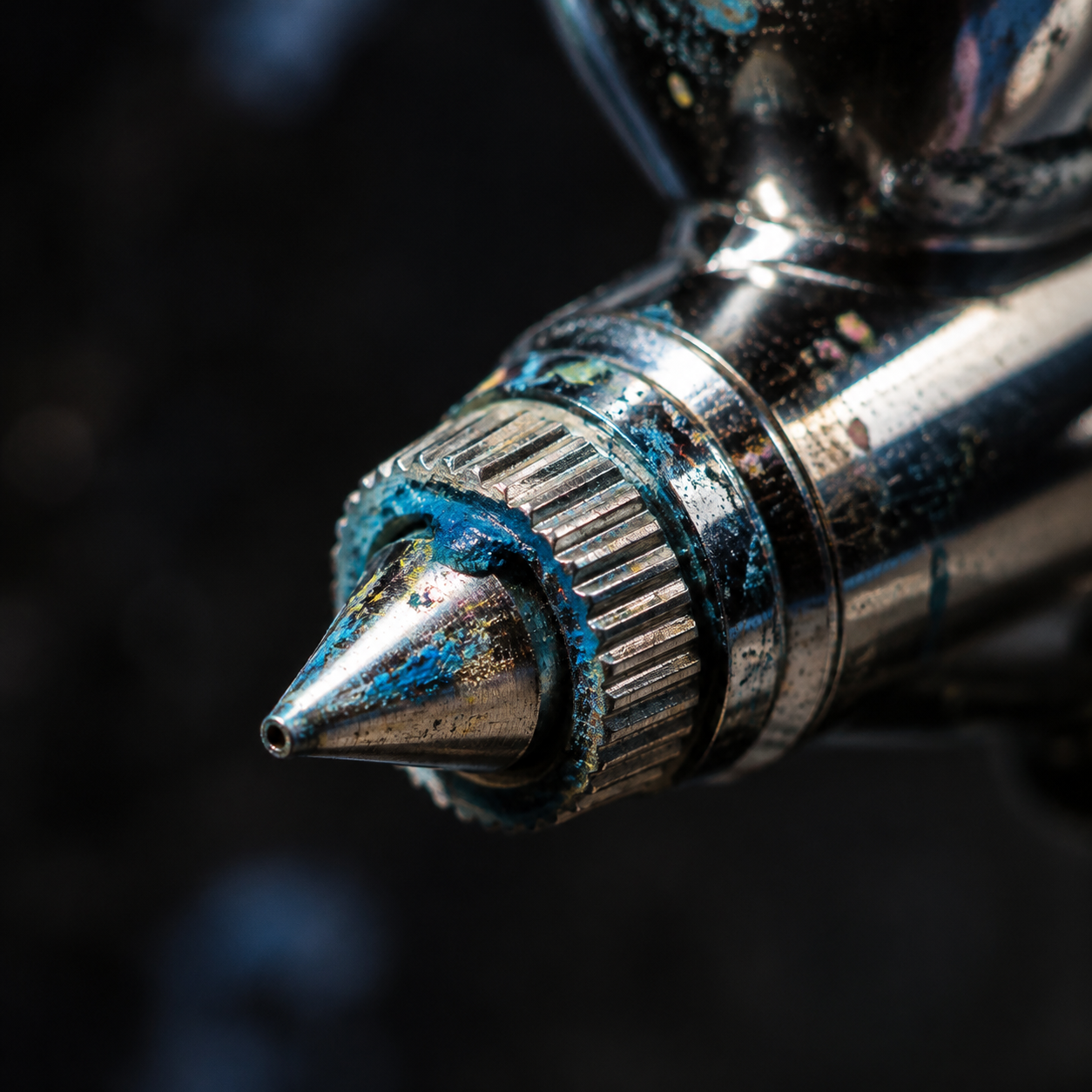
Macro of airbrush nozzle tip dry

Dedicated Airbrush Cleaner vs. Isopropyl Alcohol: Which Do You Actually Need?

Neither is universally right or wrong. They serve different jobs, and the paint label and airbrush manual decide what is suitable for your materials.

Mid-Session Flush

For fresh water-based acrylic, a quick flush with a cleaner the paint maker lists for that line — or isopropyl alcohol where the airbrush maker permits it — can clear residue between colors. Concentration and suitability vary, so check both labels rather than assuming one strength fits every paint and brush.

CHECK: Water content varies with concentration. A more dilute alcohol may take longer to clear residue; follow the cleaner's directions instead of a universal percentage.

Deep Cleaning

Dedicated cleaners are formulated for specific paint families and may include surfactants or other agents for dried residue. Some labels advertise added lubricants; others do not. Check what the product claims for your paint line.

NOTE: Lubrication is optional and product-specific. Iwata's cleaning guide does not call for routine lubrication, so follow your airbrush manual rather than adding oil by habit.

The Hybrid Approach

A common approach: flush between colors with a suitable quick cleaner, then finish the session with the dedicated cleaner your paint line calls for, following its label until the flush runs clear. How much that takes depends on the brush and the residue.

RESULT: A practical routine that matches products to the job instead of relying on one universal fluid.

Let the airbrush manual set the procedure

Which parts come off, whether back-flushing is allowed, and how long a part may soak are airbrush-specific. Iwata's cleaning guide, for example, does not soak the whole airbrush and limits its specified part soak to ten minutes; those are Iwata's instructions, not a rule for every brand. Check your own manual before disassembling or soaking anything.

What You Need in an Airbrush Cleaning Kit

The cleaner is only part of the setup. A basic kit makes the process faster, contained, and safer.

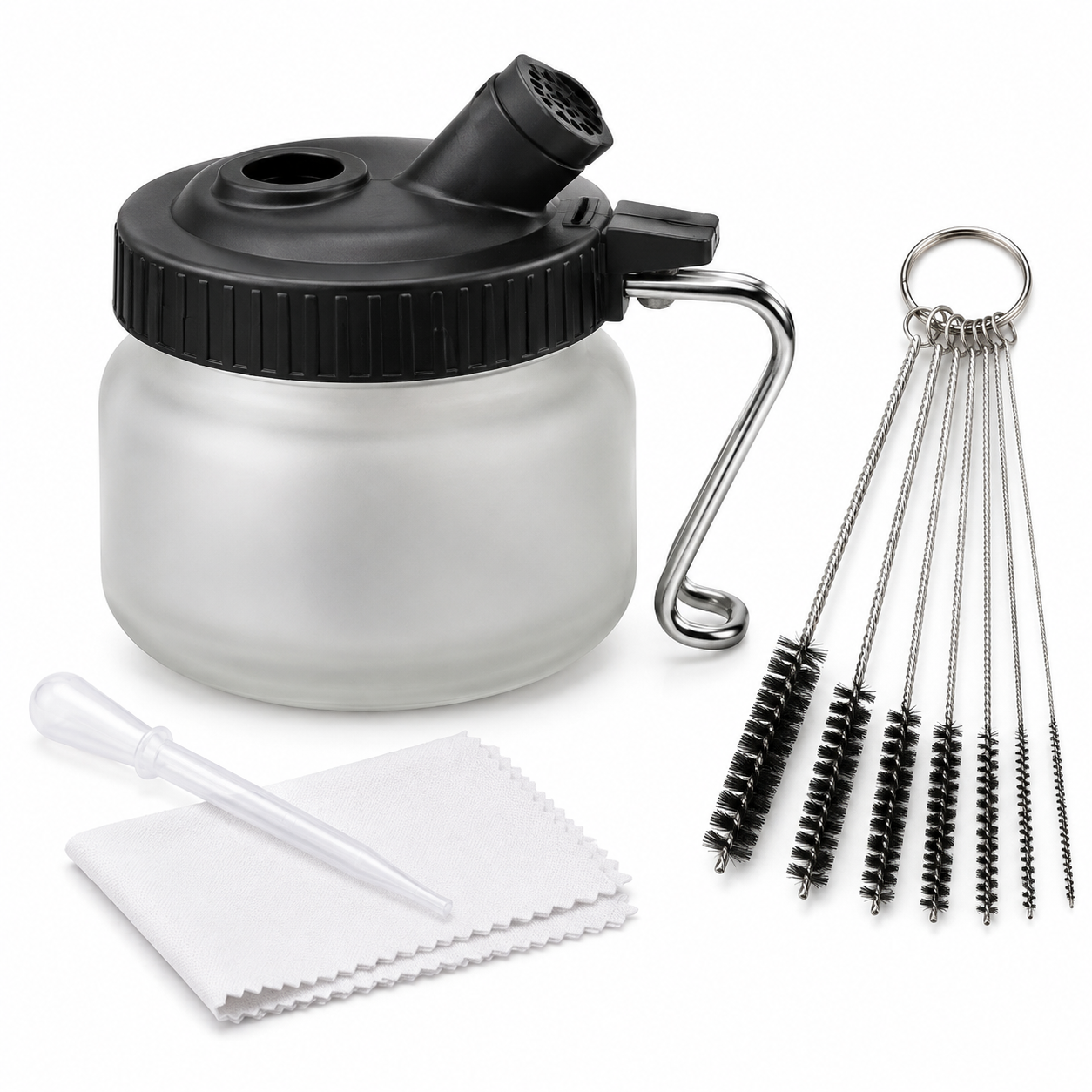
Cleaning Pot

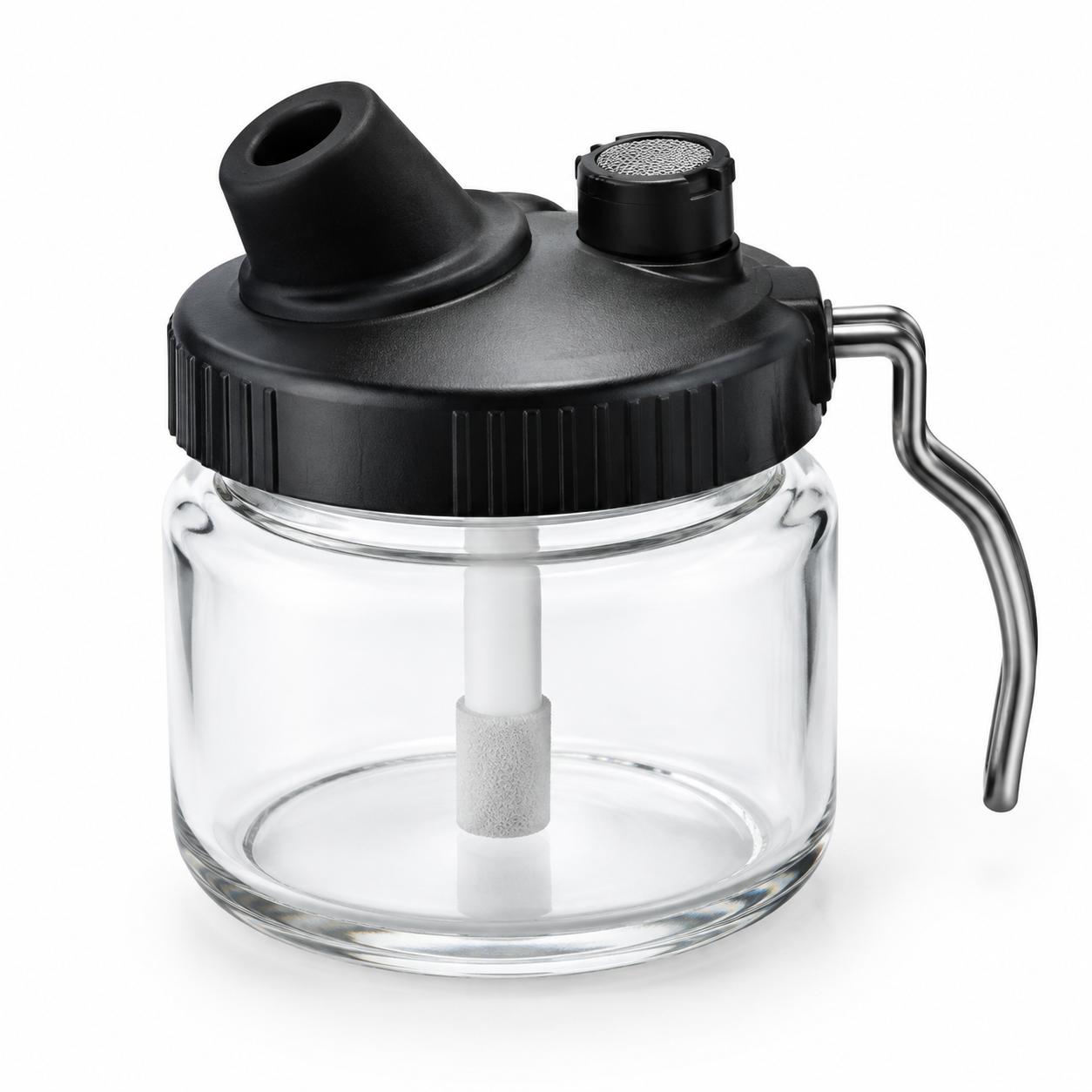
Airbrush Cleaning Pot (Spray-Out Pot)

A container with a lid and spray ports that catches spray and drips so you are not spraying into open air. It collects droplets and keeps the desk cleaner, but it is not vapour containment and does not replace ventilation.

Contains spray and drips
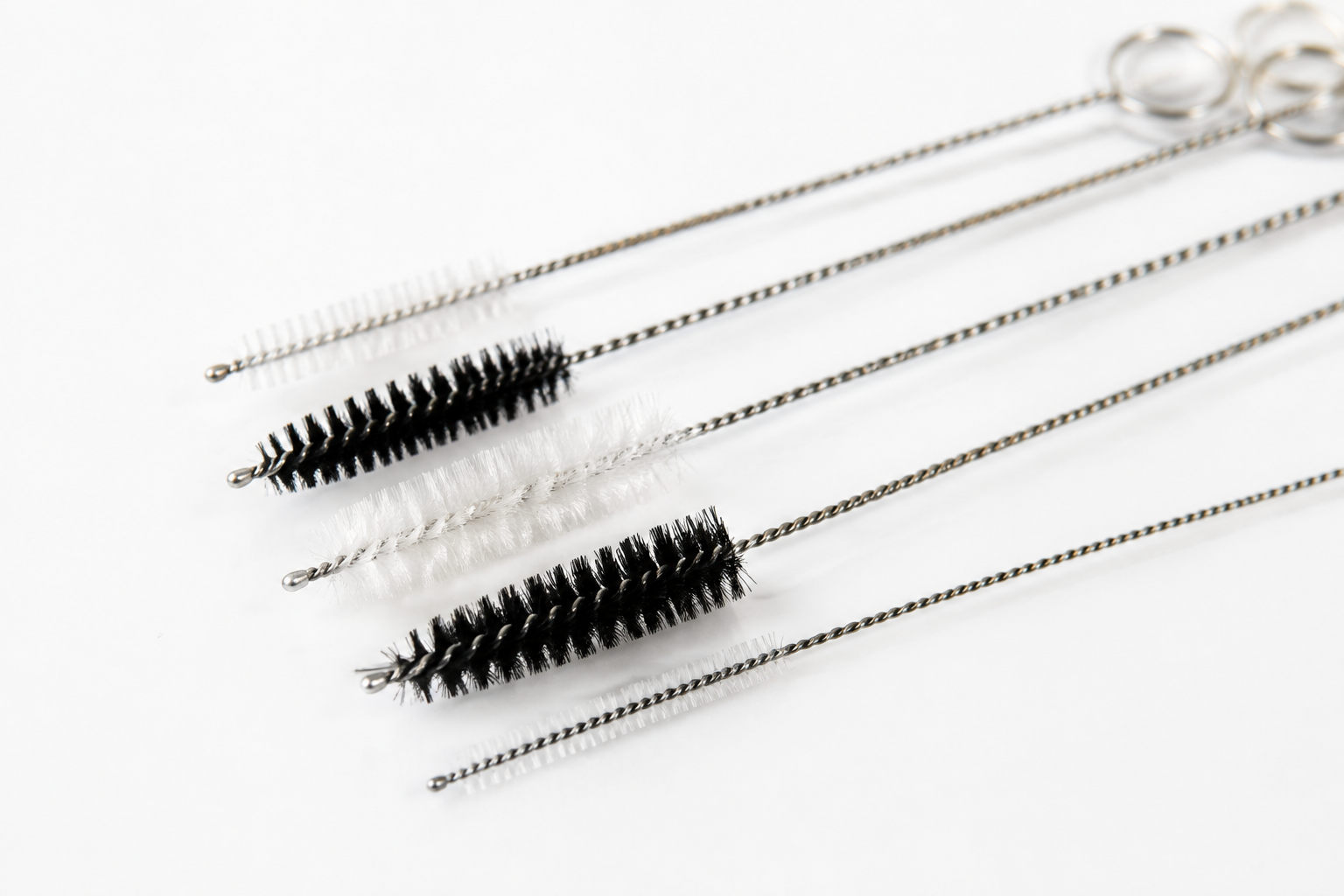
Cleaning Brushes

Needle Cleaning Brushes

Small, bristle-tipped tools for scrubbing the paint cup, needle chuck, and nozzle threads. Best used during deep cleans or to shift stubborn blockages.

For deep cleaning sessions

Recommended Cleaning Solutions

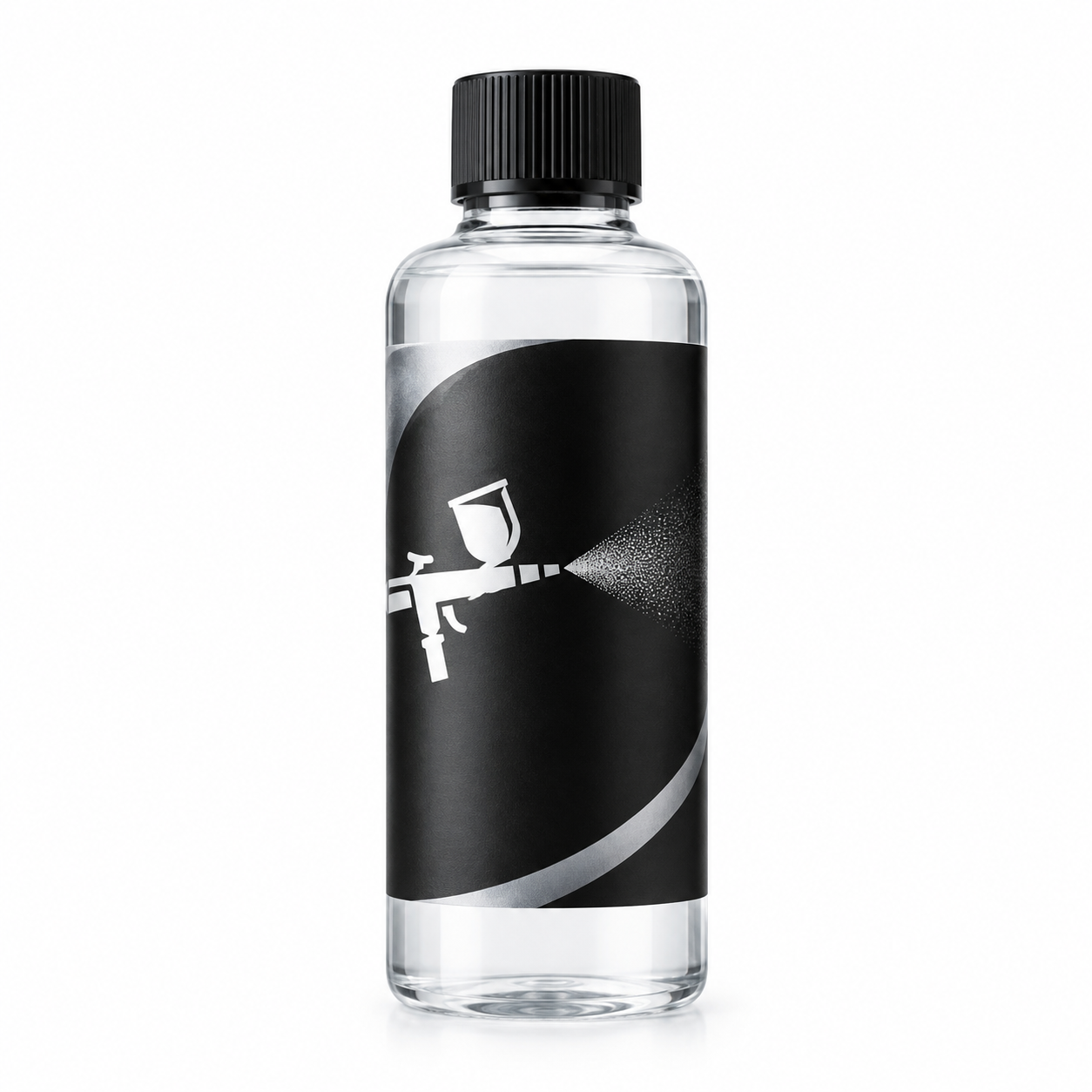
Dedicated Airbrush Cleaner
Best For: Deep Cleaning

Dedicated Airbrush Cleaner

Cleaners vary by formula: some use surfactants to lift dried paint, and some add lubricants for seals. Check the label for what a specific product claims.

  • ✓ Surfactants for dried paint
  • ✓ Some formulas include seal lubricants
  • ✗ Higher cost than IPA
Search airbrush cleaner on Amazon
Airbrush Cleaning Kit
Best For: Routine Maintenance

Airbrush Cleaning Kit & Pot

A setup with a spray-out pot and needle brushes for containing spray and drips during cleaning.

  • ✓ Catches most spray and drips
  • ✓ Includes essential brushes
  • ✗ Requires filter replacement
Search airbrush cleaning kits on Amazon

Airbrush Cleaner Safety: Ventilation, Storage, and Disposal

Ventilation

Spray and solvent vapours should not build up where you breathe. Work with good ventilation — an open window, a spray booth, or both — and follow the product label and safety data sheet. A spray-out pot does not substitute for ventilation.

Storage

Keep fluids closed, upright, and away from sunlight, heat, and ignition sources. Store them out of reach of children and pets, and follow the label.

Waste Disposal

Never pour solvent or contaminated cleaner down the drain. Collect it in a labelled, closed container and take it to your local household hazardous-waste service; follow the product label and local rules.

Airbrush Cleaner FAQ

Can I use Windex or ammonia-based window cleaner?

Ammonia can dissolve dried acrylic but may be harsh on some rubber seals and plated parts with repeated use. Check your airbrush and cleaner manufacturers' guidance; a purpose-made cleaner may be gentler, but compatibility still depends on the product.

How often should I clean my airbrush?

Flush between every color change, and do a full cleaning at the end of every session. Never leave paint in the brush overnight.

What is the difference between cleaner and thinner?

Thinner is mixed with paint to spray; cleaner is used after painting to dissolve residue. They are not interchangeable.

Does airbrush cleaner damage an airbrush?

Many purpose-made cleaners are formulated with airbrush materials in mind, but compatibility varies by product and by your airbrush's seals and plating. Read the cleaner label and your airbrush manual; avoid strong industrial solvents like acetone unless the manufacturer approves them.

What is an airbrush cleaning pot?

A jar or pot with a lid and spray ports that catches spray and drips. It contains mess, not vapours, and does not replace ventilation. It is optional.

Can I make my own airbrush cleaner?

Home-mixed cleaners circulate in hobby forums, but a mix is not a manufacturer-approved formula for your airbrush or paint line. The paint label and airbrush manual are the reliable reference; use a product intended for the job rather than guessing at ratios.