Single Action Airbrush:
Is It Right for Beginner
Miniature Painting?
A single action airbrush is one of the simplest ways to start spraying. Press the trigger, and air and paint flow together. It is well suited to even coverage and priming, but offers limited mid-stroke control.
How a single action trigger works:
- Trigger:Press down to release air and paint together.
- Paint amount:Set with the fluid control before you start spraying.
- Mid-stroke changes:Limited. Changing the amount of paint means stopping to adjust.
What a Single Action Airbrush Does Well
Single action airbrushes suit jobs where consistency matters more than fine control. Priming and base coating are the most common examples. A steady, repeatable spray lays down an even layer across a figure or a piece of terrain. Because the trigger has only one job, beginners have fewer controls to manage while they learn to thin paint correctly and set their air pressure.
Primer and base coats
Even, repeatable coverage for the foundation of your figures and terrain.
Even coverage
A good fit for larger surfaces and scenery where uniformity is key.
Where It Falls Short for Miniature Detail
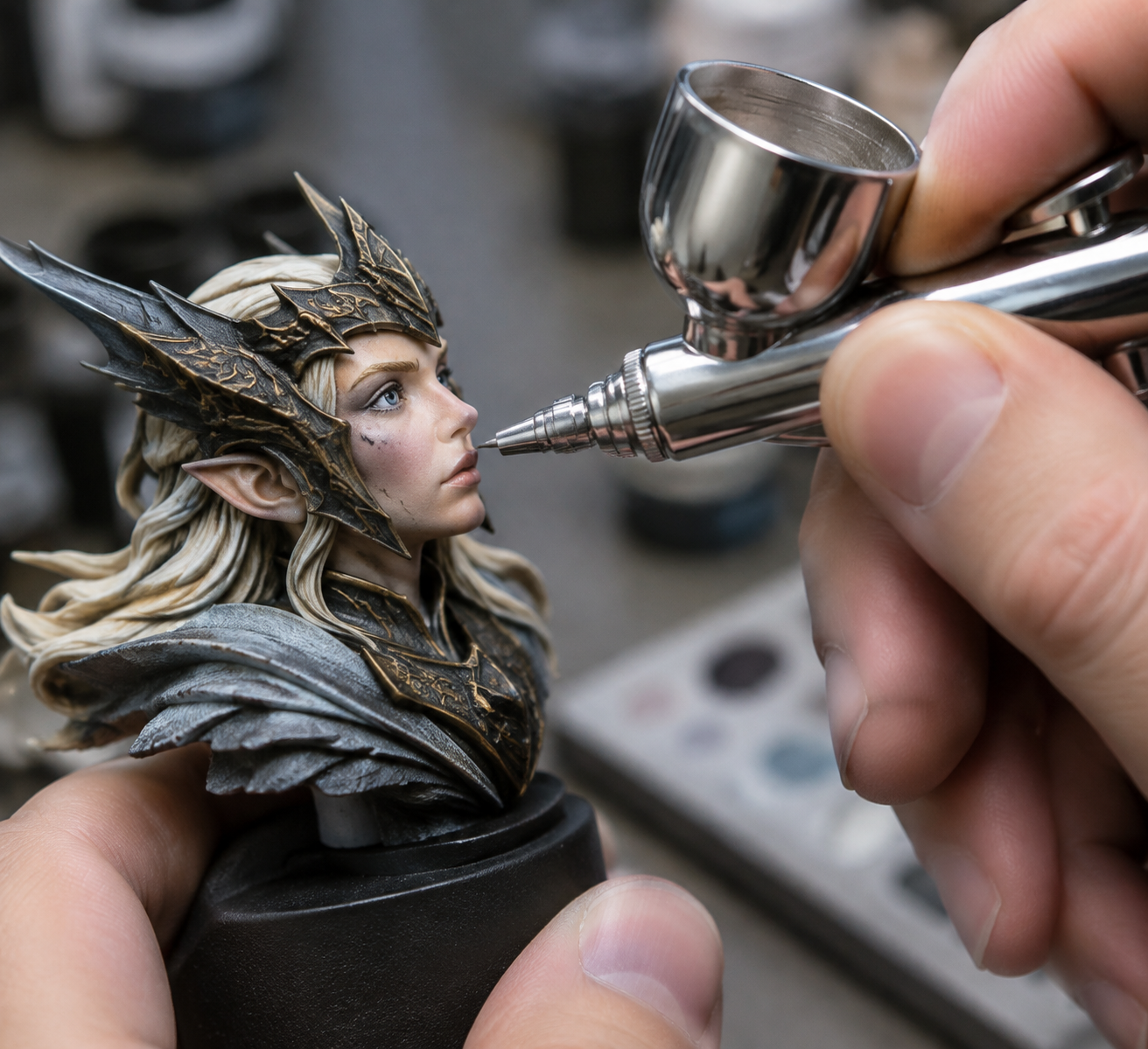
Detail painting often depends on changing how much paint lands in the middle of a stroke, such as fading from a dark tone to a light one across a cloak or pulling a thin line across a face. A single action airbrush releases air and paint together on the trigger, so those changes need you to stop and adjust, or to switch to a brush.
That is a difference in on-the-fly control, not a ban on detail. With a fine nozzle, paint thinned for that nozzle and the fluid control set low, a single-action brush can lay in small areas. What it cannot do is change paint volume during a pass without stopping.
- Soft fades are harder in one pass
- Thin lines need a fine nozzle and careful setup
- Changing volume mid-stroke means stopping
Single Action vs Dual Action in Plain Terms
A dual action airbrush lets you control air and paint separately. Pressing the trigger releases air, and pulling it back adds paint. That gives more control over how much paint reaches the surface at each point, but it also takes longer to learn.
A single action airbrush trades that flexibility for simplicity. Neither type is better for every job. The right choice depends on the work you plan to do most often.
Setting Up for Your First Models
Follow this routine to keep early sessions predictable.
Fluid Control
Set the fluid control to a small amount of paint before you spray.
Thin & Test
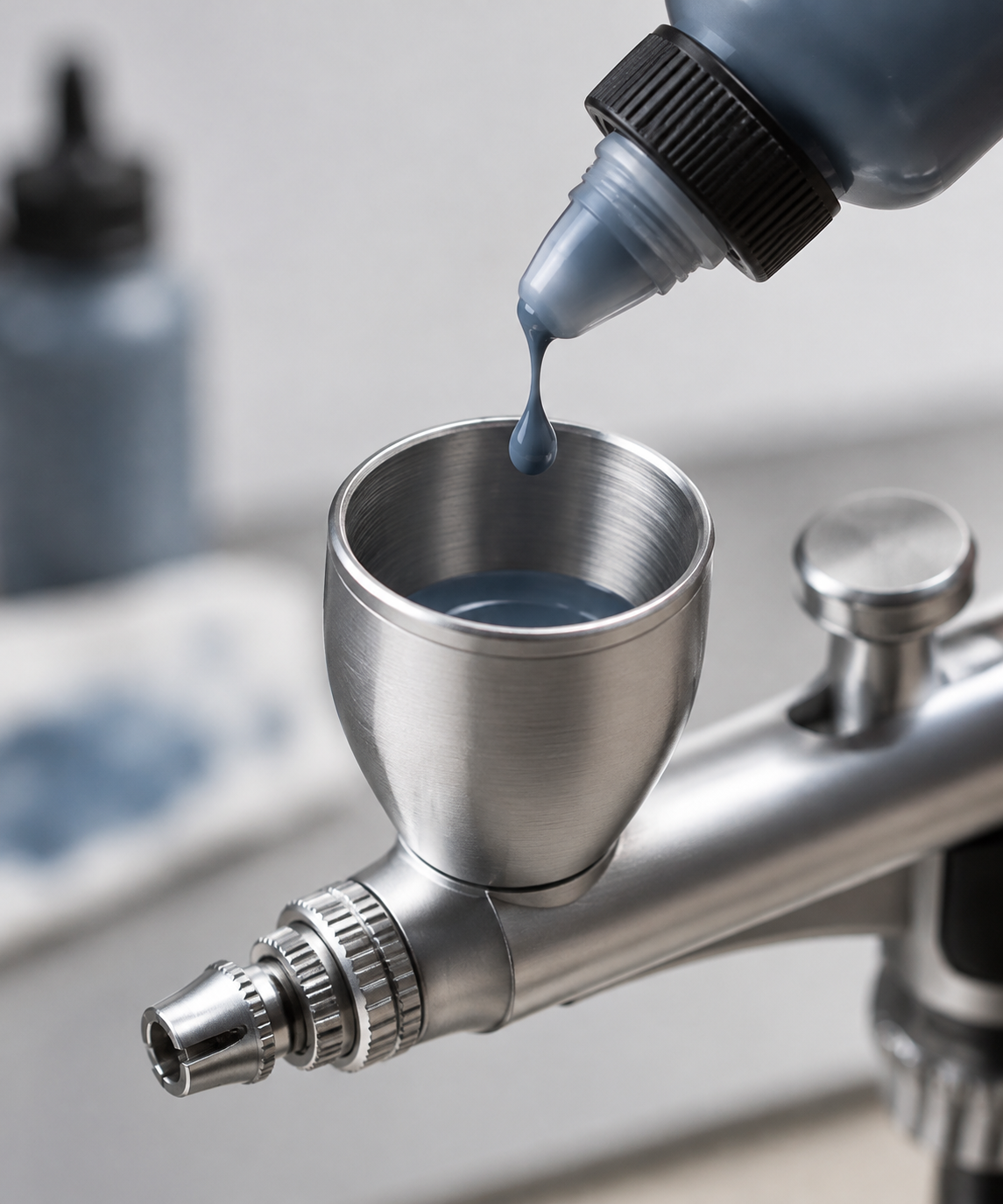
Thin your paint and test it on a scrap card. Thick or partly dried paint can cause spitting.
Distance & Motion
Hold the airbrush at a steady distance and keep the stroke moving.
Maintenance
Clean the cup, needle, and nozzle thoroughly after every session.
New to the hobby? Get the right mix before starting.
Limits and Alternatives
A single action airbrush does not replace a brush. Brushes remain useful for eyes, faces, edge work, and small details that need quick, precise control. If your painting will focus on fine detail, a good brush set may matter more than your first airbrush.
Compare brushes for miniature paintingIs a Single Action Airbrush Right for You?
Check the statements below before you buy. If most of them fit, a single action airbrush is a sensible first choice.
Your first projects involve primers, base coats, or even color across several models.
You prefer setting paint amount before a session rather than changing it mid-stroke.
You are ready to learn paint thinning and cleaning before expecting detailed work.
You have a compressor or steady air supply ready for use.
Compare options in the compressor guide →You plan to keep a high-quality brush nearby for all fine detail work.
Next Step: Choose the Right Airbrush Gun
Ready to choose your first airbrush? Compare types and pick the one that matches your projects.
Find the perfect balance between simplicity and control.
Frequently Asked Questions
Is a single action airbrush good for beginners?
Often, yes, for priming, base coats, and learning the basics. Its single trigger keeps early practice simple. Detailed shading usually comes later, once you are comfortable with thinning and air pressure.
Can you do fine detail with a single action airbrush?
Yes, within limits. A fine nozzle, paint thinned for that nozzle and the fluid control set low let a single-action brush lay in small areas. The limitation is that you set paint volume before the pass rather than changing it mid-stroke, so fades and quick weight changes are harder.
Do I need a compressor for a single action airbrush?
Most airbrush setups need a steady air supply, often from a compressor. Compare options in our compressor guide.
How do I keep a single action airbrush working well?
Thin your paint before spraying, and clean the cup, needle, and nozzle after every session. For a step-by-step routine, read the airbrush cleaning guide.