Why a cotton swab gets warm
Super glue is cyanoacrylate, an acrylic resin that hardens by polymerization. Poison Control supplies both parts of the explanation: polymerization happens more quickly when water is present, and a large amount of the liquid on skin can cause chemical burns because the polymerization reaction releases heat (Is super glue toxic?). Curing is where the heat comes from, and the adhesive has to be sitting somewhere while it cures.
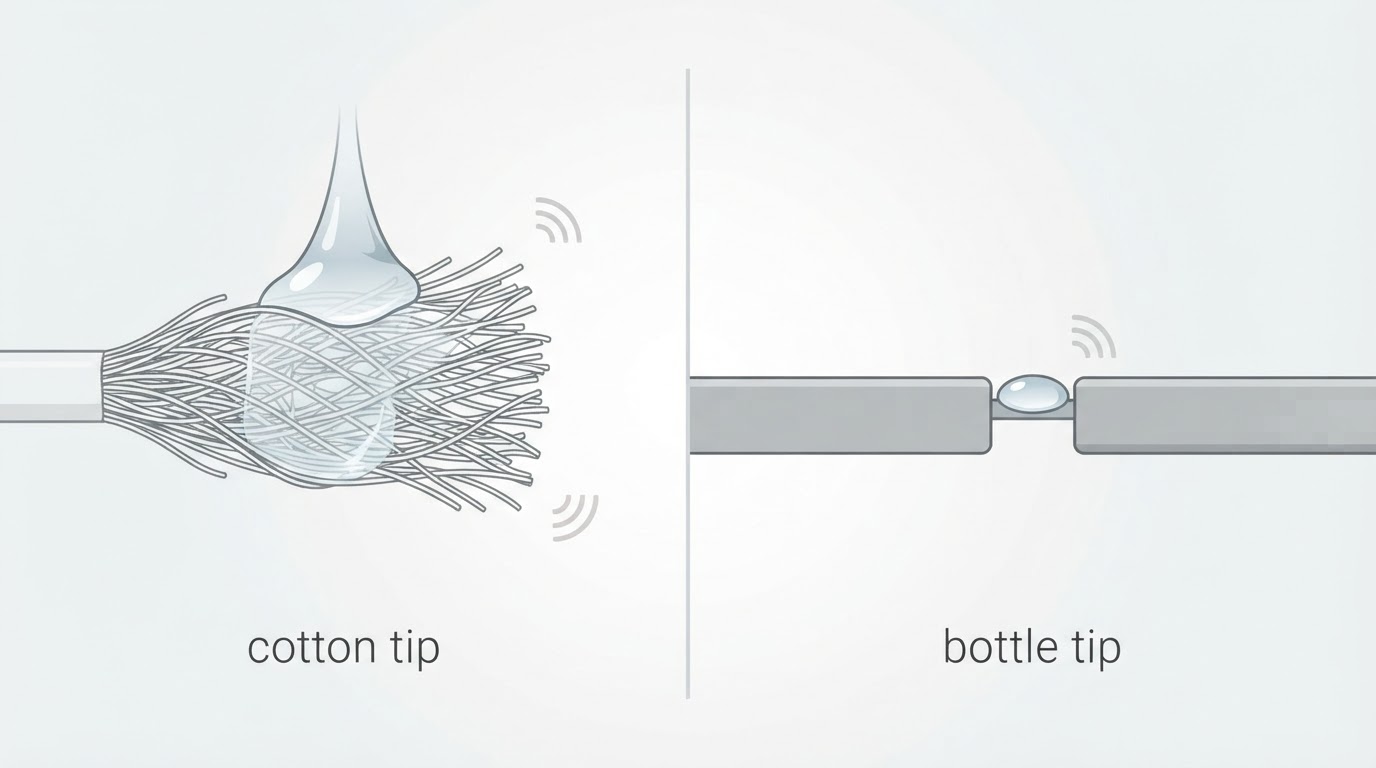
Poison Control is explicit about that somewhere. Its eyelash-adhesive article says not to remove cyanoacrylate with fabric such as a cotton ball or swab, because cyanoacrylate can react with cotton or wool to release enough heat to cause burns (Is eyelash glue toxic?). That page's setting is semi-permanent lash extensions, and it says so; the warning it gives is about the chemistry, and it names instant-bond glues such as Super Glue as the same cyanoacrylate family. Loctite's consumer guidance arrives at the same place from the manufacturer's side, telling readers to avoid using super glue with cotton and wool (Super glue: Everything you need to know).
A warm swab, then, is the curing reaction happening in the material both sources tell you to keep liquid super glue away from. That observation alone does not establish that the bottle is faulty.
What to use instead of a swab
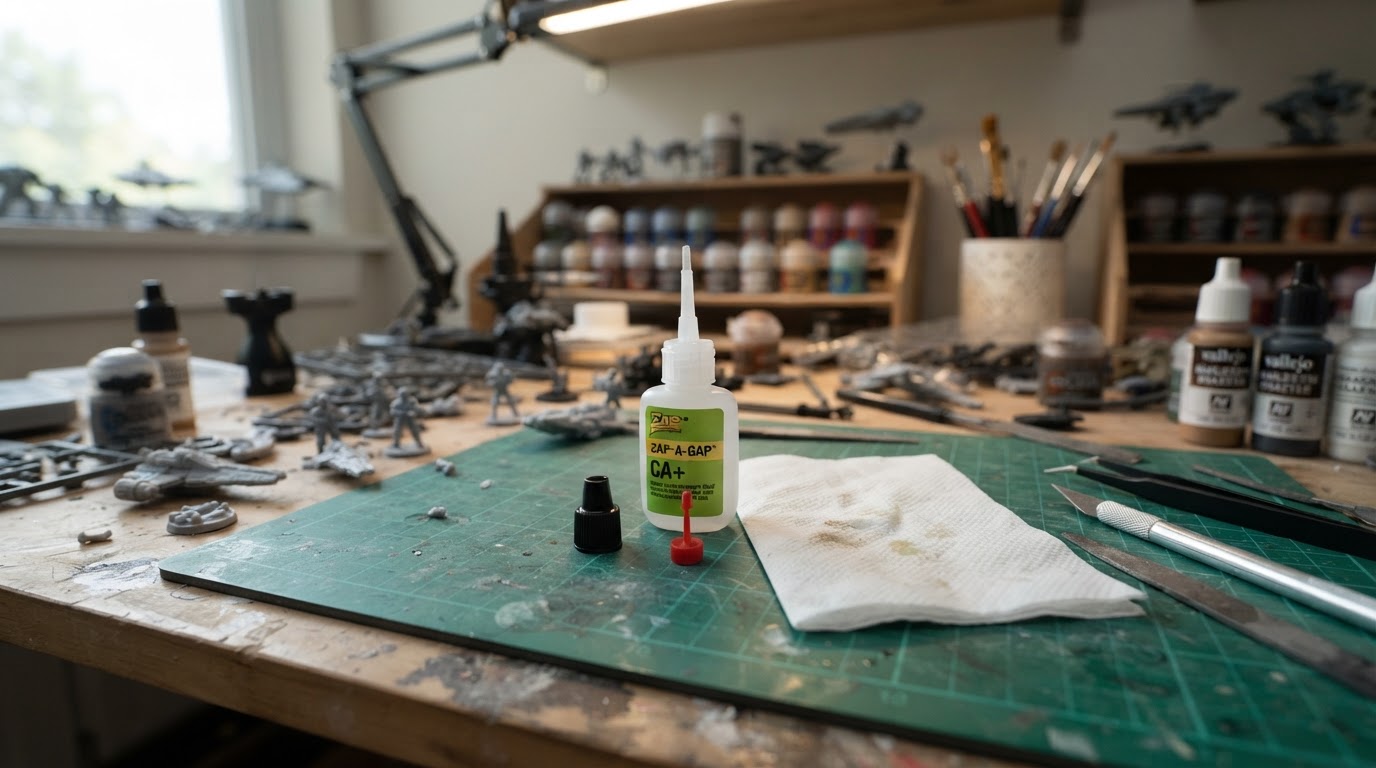
The concrete replacement is the applicator the product ships with, or one its maker approves for it. Loctite describes its bottles as having applicator styles built for control, including a precision tip and a longneck bottle designed to dispense drop by drop, and it describes gels as more viscous and less drippy than the liquid version (Super glue: Everything you need to know). Which of those you have depends on the bottle in front of you, and its label is the authority on how to use it.
The habits the guidance does support are short.
- Place the drop with the tip. Poison Control's prevention advice is to apply a small amount at a time and squeeze out only a small portion.
- Follow the label for ventilation and eye protection. The safety data sheet and label for your specific bottle carry its handling instructions and outrank any bench habit.
- Keep liquid glue off cotton swabs, cotton balls, cotton rags, cotton clothing and wool. That is the list Poison Control and Loctite both name.
Poison Control's prevention tips also suggest rubber gloves or finger cots while applying super glue. That advice is about keeping liquid adhesive off your hands; it does not establish that a particular glove or wipe is a safe place to put glue. If your product's label specifies a glove material, that instruction wins.
Neither source read here names an approved absorbent substitute for a swab, and neither gives a safe volume for spilled liquid. Do not assume another porous or synthetic wipe behaves the same way as cotton; a replacement would have to come from your product's own label or safety data sheet.
A bead at the nozzle, a wet spill and dried glue are three different jobs
Most swab use on a miniature bench is one of three jobs. Only one of them involves a pool of liquid adhesive.
Situation | The usual habit | What the guidance supports |
|---|---|---|
A wet spill of liquid glue | Blot it with a swab or a cotton cloth | Use the spill procedure in the product's safety data sheet or label. Cotton and wool are the two materials both sources warn about, and blotting is exactly that contact. |
A bead at the nozzle | Twist a swab over the tip | Use the applicator or cap the bottle came with, following the label's own procedure for clearing it. The nozzle guide linked below covers storage and clogs. |
Dried glue on a finished part | Soak or scrub it with a swab | Cured cyanoacrylate is chemically inert, per Poison Control, so this is a removal task rather than a spill. Use the removal method for that adhesive and that material. |
A product instruction to wipe a small bead off the nozzle describes a tiny amount of adhesive on a tip. It is not permission to soak an absorbent tip and drag it along a joint or through a puddle; that is the wet contact Poison Control warns about. Cured glue being chemically inert does not make every solvent or substrate safe either, and a cured-glue or acetone instruction is not permission to blot liquid cyanoacrylate with cotton.
For the clog itself, clearing and storage are covered in the guide to stopping super glue bottle nozzles from clogging, and the label for your bottle still sets the procedure.
For a real spill, work from the spill procedure in your product's safety data sheet or label rather than an improvised method. Do not treat water, accelerator or heat as a way to neutralize liquid glue on a bench, and do not run a demonstration to see what it does.
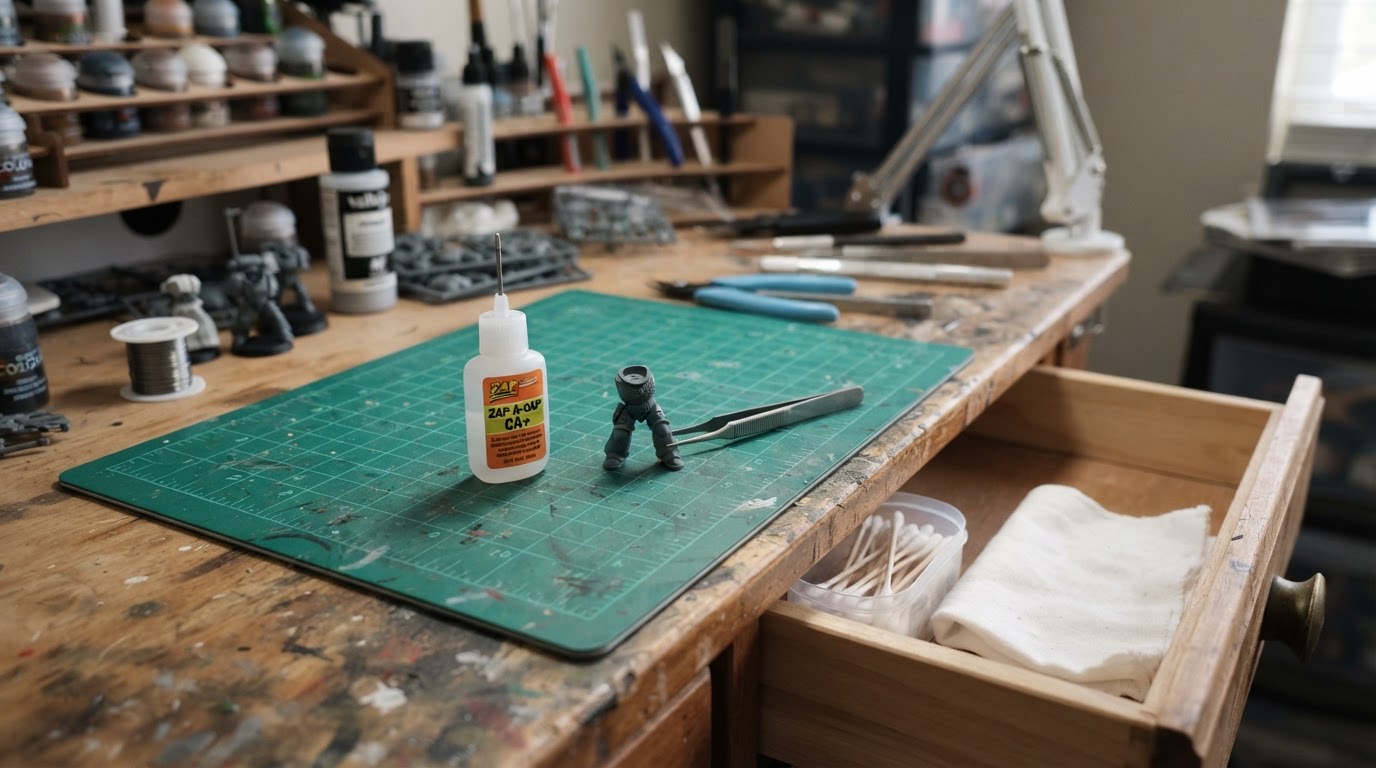
If it gets hot, smokes or bonds skin
Stop handling it, keep others away, and follow the emergency and spill guidance for the exact product from its label or safety data sheet.
Do not pull bonded skin apart: Poison Control's instruction is to avoid ripping cyanoacrylate off skin because it takes skin with it, and not to detach a stuck swab by force (Is super glue toxic?). For a burn, eye contact or significant symptoms, get urgent professional or Poison Control guidance instead of an improvised solvent, a home burn remedy or a forum method. In the United States, Poison Control is 1-800-222-1222, free and available around the clock, and its pages also point to the webPOISONCONTROL tool.
The consumer guidance read here establishes heat and burn risk from cotton and wool contact; it does not say how much heat a given drop will produce. There is no reason to test ignition, and no reason to wait until you feel heat before keeping liquid glue off cotton.