All Posts
Browse all blog posts
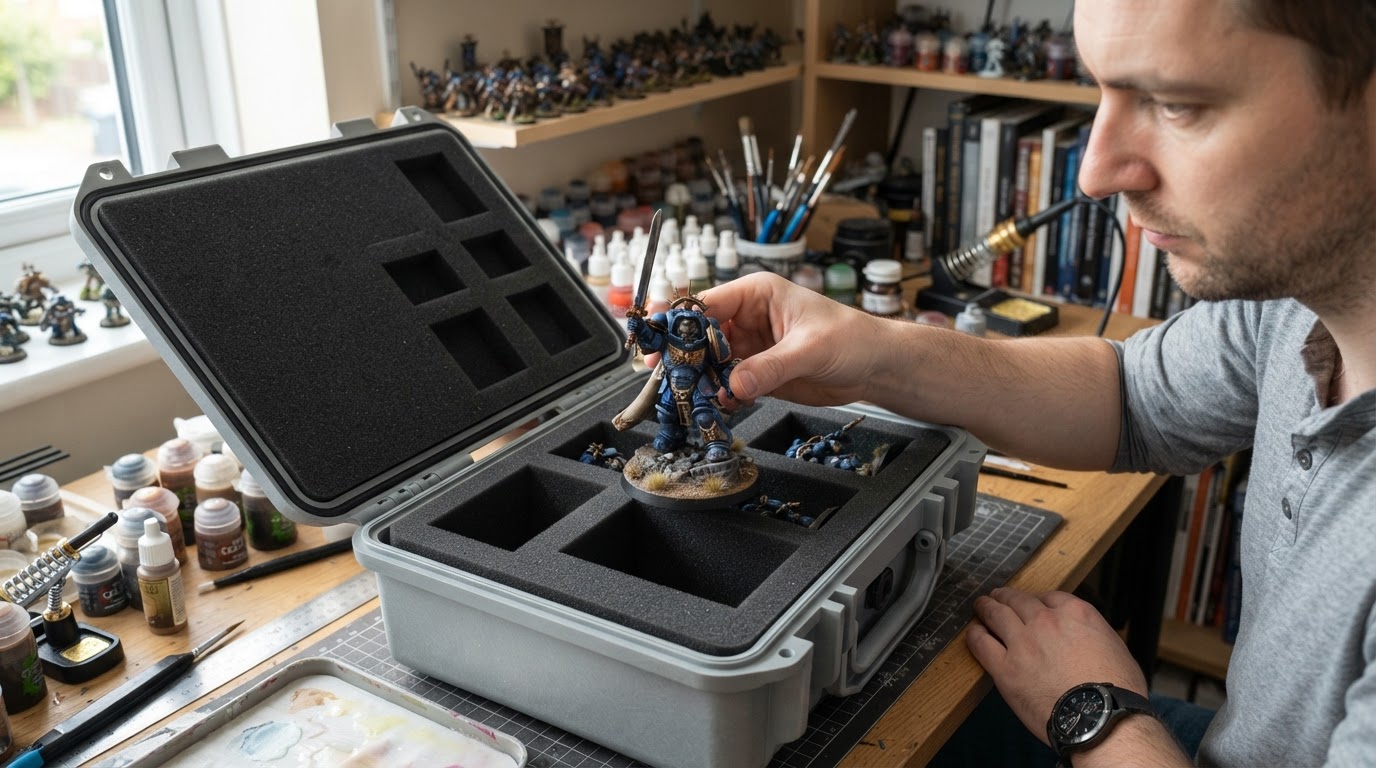
How to Transport Painted Miniatures Without Loading the Fragile Parts
Measure clearance against the case, separate each painted figure, restrain the load and lid, and hand-check the closed case before a local trip.
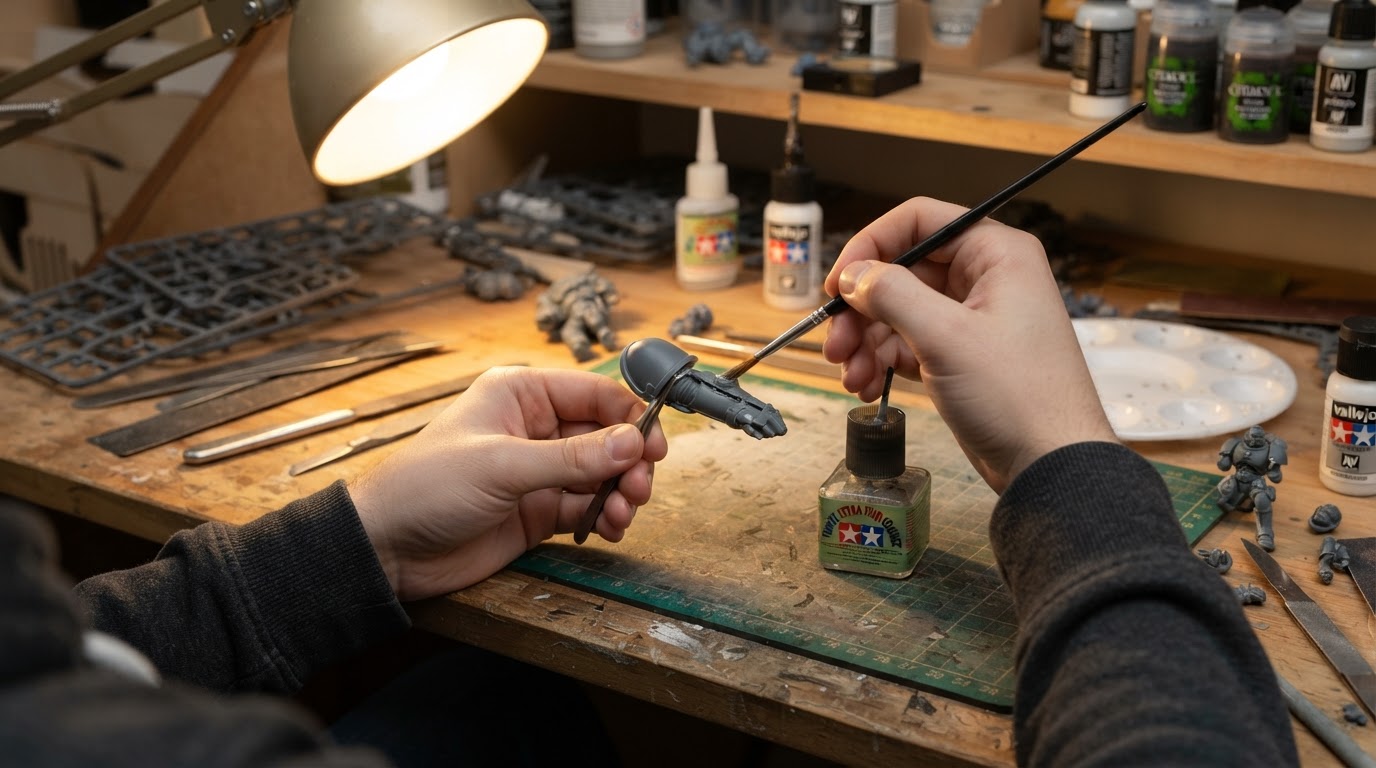
Sprue Goo for Miniatures: A Gap Filler, Not a Universal Glue
Sprue goo for miniatures is a solvent-softened plastic filler for compatible polystyrene seams. Learn when it helps, when putty or another repair is safer, and how to re-check a fill before sanding.
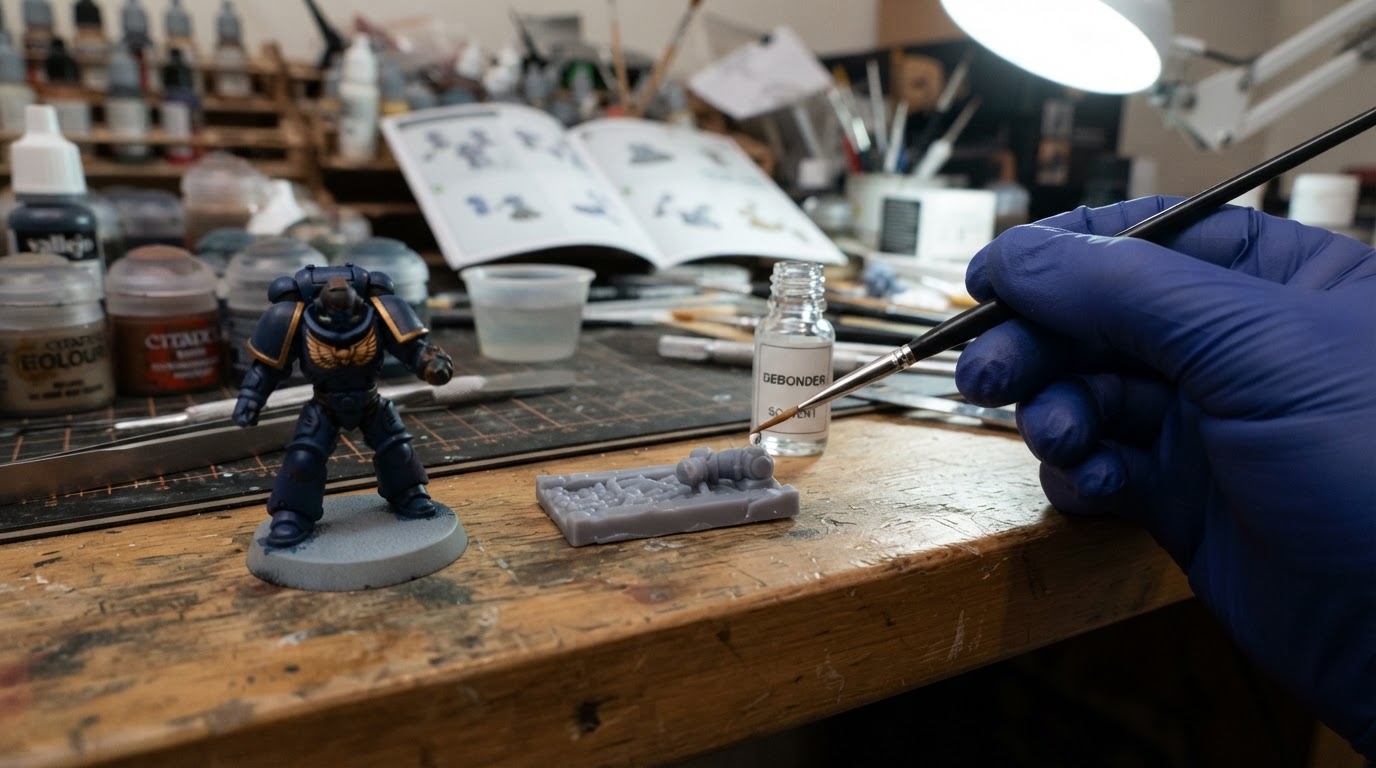
How to Remove Super Glue from Miniatures Without Assuming the Material
Removing cured super glue from a miniature is a material-safety decision, not a solvent recipe. Identify the plastic or resin, test a CA debonder on spare material, and stop at the first sign of softening or paint damage.
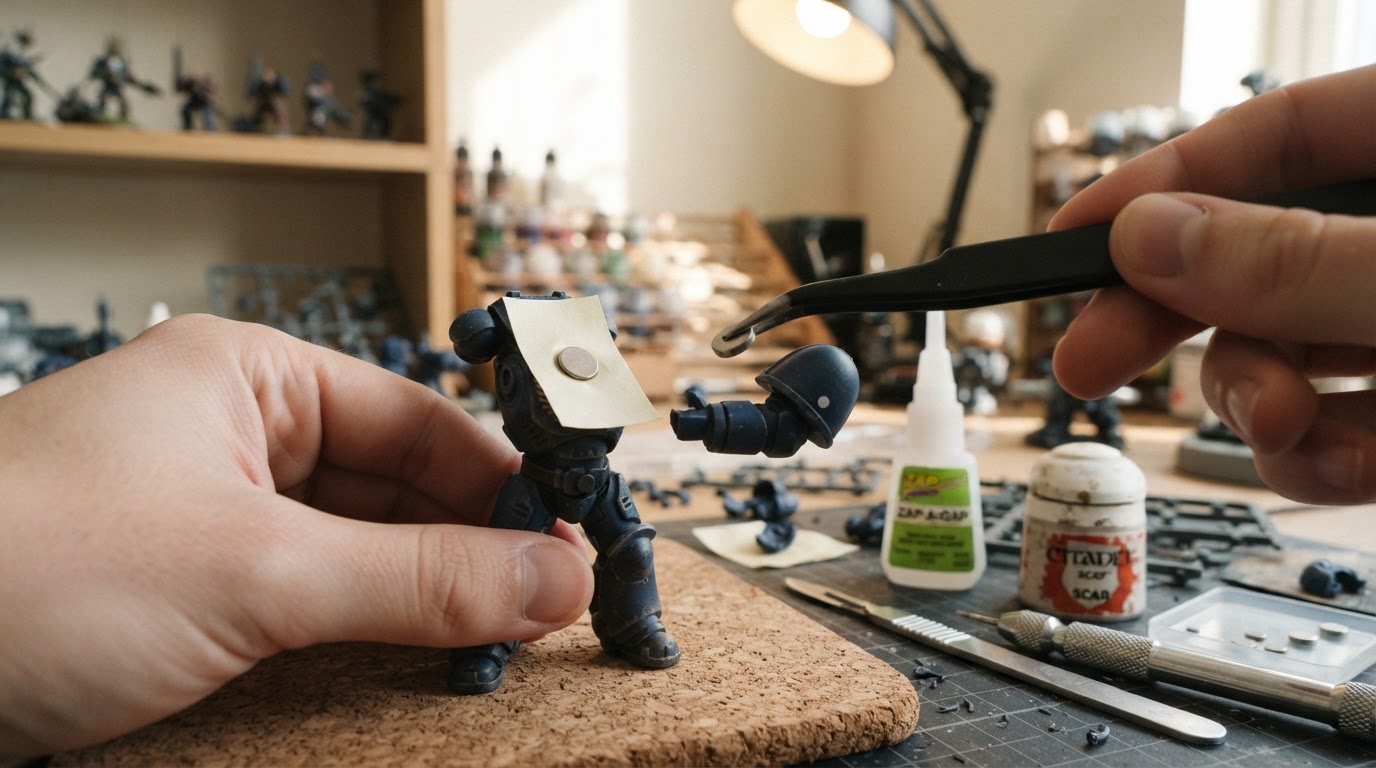
Miniature Magnet Polarity: Keep Swappable Parts Facing the Right Way
Magnet polarity for miniatures: glue one side first, mark the mating face, and test every swappable arm through a paper barrier before the glue goes on.
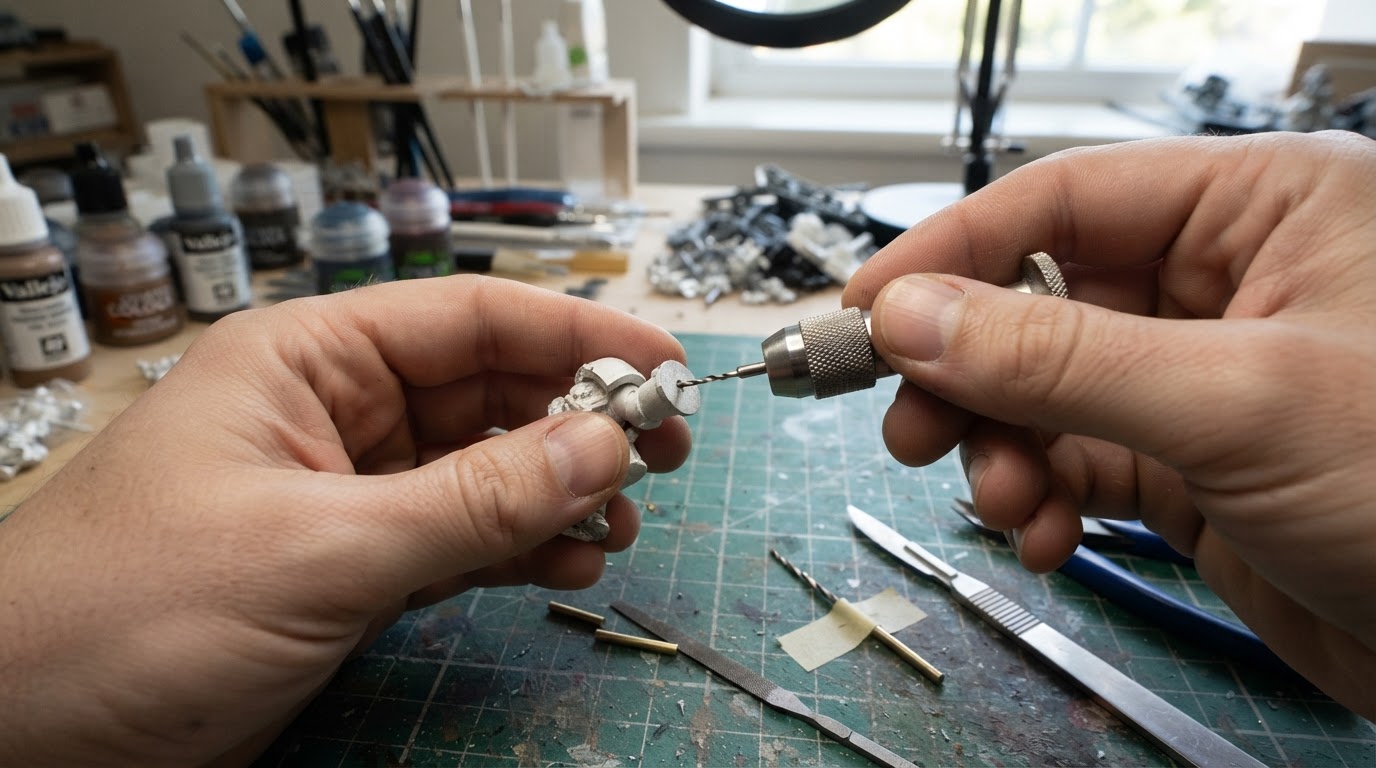
Pinning Miniatures: Align and Reinforce a Joint Before Gluing
Pinning miniatures: check the joint has material, match rod to bit, drill a shallow pilot hole, transfer the mark, dry fit, glue by material, and brace through cure.
Milliput vs Green Stuff: Choose for the Shape and the Finish
Milliput vs green stuff: Milliput for rigid seams you plan to sand, Green Stuff for flexible detail, plus the right adhesive and reinforcement when needed.
Plastic Glue vs Super Glue for Miniatures: Choose for Each Joint
Plastic glue vs super glue for miniatures: polystyrene cement welds compatible plastic; CA suits resin, metal and mixed joints. A material-first matrix.
Warhammer Tone Pro vs Shade Paints: Different Jobs, Not a Direct Swap
Tone Pro numbers five values per colour; Citadel Shade is a recess wash. Compare the jobs, studio recipes and how to test a change on spare parts.
Best Filament for Miniatures: Choose PLA by the Part and Nozzle
Best filament for miniatures: start with plain unfilled PLA on a matched profile, compare maker-backed specs, and see which filament is not compatible with 0.2 mm nozzles.