Measure the figure and the space before you pack
Pack finished figures around their clearance. Weapons, banners, spikes and scenic base details stick out where a case can press. Measure from the table to the highest point, and measure the footprint of the base or plinth rather than the model's body. Then measure the compartment depth and subtract what the closed lid occupies.
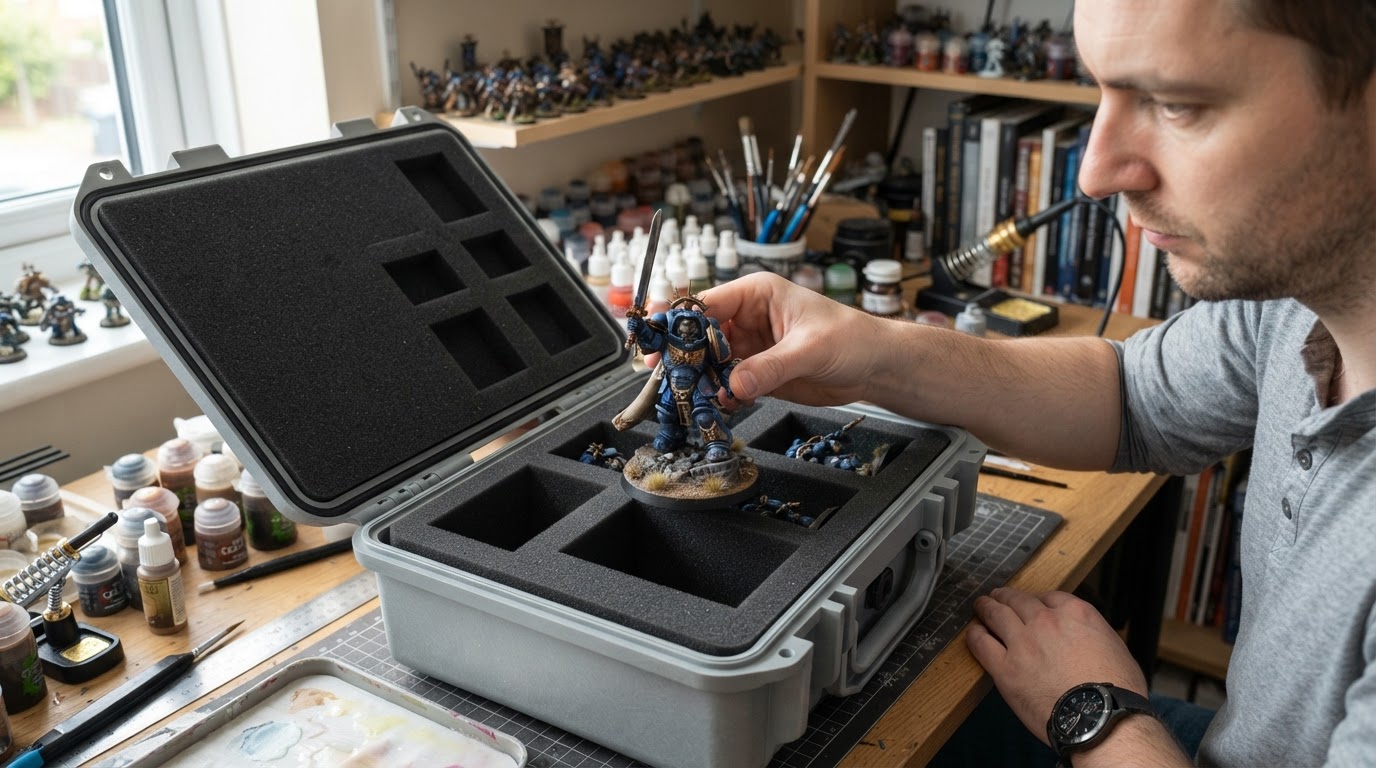
If the tallest point only fits when you push the figure down, that layer is wrong. Move it to a deeper compartment or reshape the layer instead of forcing it. Height is not the only reading: a wide scenic base can overhang its seat and take lid pressure on its rim.
Magnetized bases add their own measurements. The guide to what size magnets for Warhammer bases treats cavity depth, model weight and tray material as separate readings, and warns that a magnet taller than the cavity will hold the base off the surface. A magnetized base also needs a rigid container with a tray the magnet can hold to, not a soft bag. Settle those numbers before any glue goes on.
Cushion the figure or secure the base, not both by accident
A Bird with a Brush article on transporting miniatures separates the inner method into two options: cushioning the figure in foam or bubblewrap, or attaching its base to a flat surface so the model stands free. The author also separates that inner method from the outer case, since one choice can dictate the other.
Whichever inner method you use, keep painted parts away from each other. One figure per compartment, or one wrap per figure, limits contact but cannot guarantee that a sword never rotates into a neighbouring shoulder once the lid goes down. Separation lowers the odds; the fit still has to be checked.
Fitted foam is design-specific. A cut that matches one figure can leave the next one loose at the weapon or the banner, and a foam tray is only as protective as that fit. The same source notes that some foam is abrasive and that sharp parts tend to stick into it, and suggests a barrier of plastic wrap, bubblewrap or tissue between the paint and the foam. That fixes a specific problem; it is not a verdict on foam, and it does not make a fitted tray safe to invert.
Restrain the inner load, then close the lid
Inner restraint means the figures stay put inside the case. Outer restraint means the case itself does not slide around in the car. They are separate jobs.
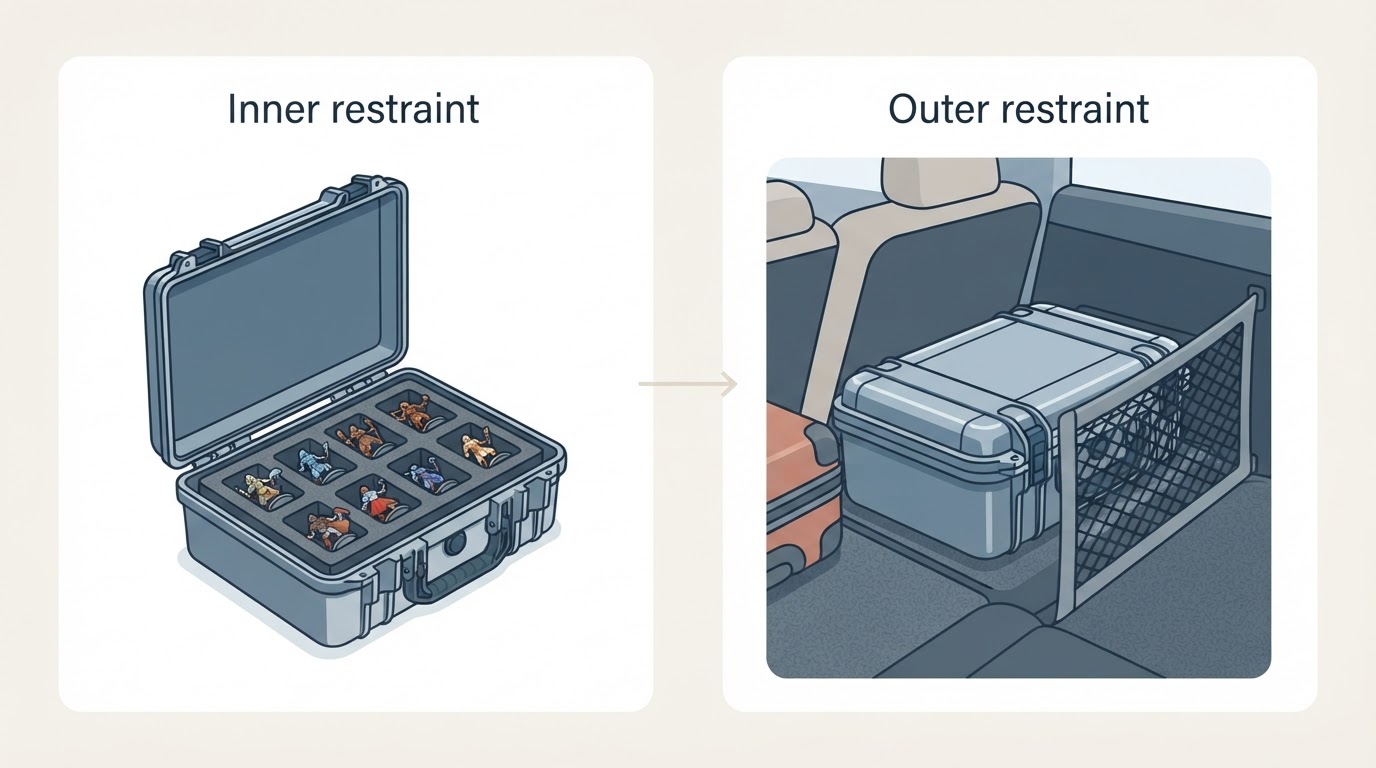
For a local trip with the case kept upright, base attachment, including a miniature case with magnetic trays, packs and unpacks quickly, though the source notes that magnetization and poster tack work best when the outer case is kept largely upright. Wrapping or foam is slower to handle and can suit a case that has to lie flat, but how secure either method is depends on the wrap, the cut and the base rather than on the method's name. Keep upright-only systems upright, and treat a case that will lie on a seat or in the trunk as a different packing problem.
Before a new restraint carries finished figures, test the arrangement with expendable pieces. Old or already damaged models show you where a weapon catches a lid liner or where a base slides, without risking the paint job you spent the week on.
Then close and latch the lid, and look for contact. A lid liner that presses a raised weapon will load exactly the part you were trying to protect, and an unlatched lid lets the inner load shift.
Do a gentle hand-check, not a drop test
With the case closed and latched, lift it a few inches and tilt it slightly side to side. Listen for movement and feel for shifting weight. The check is a preliminary screen for a loose load, not proof that the case will survive a journey, and it says nothing about a case turned upside down.
Painted figures are the wrong test pieces for inverting, shaking or dropping, so keep those checks for expendable figures. Open the case, adjust separation or restraint, then repeat the gentle check.
Unpack on arrival before you play
Set the case down flat and open the lid without tipping it. Lift each figure by its base or plinth, never by a weapon, banner or scenic detail. Check the thin parts and base edges before the figures go on the table, and keep the wrapping in order for the return trip.
Air travel and shipping need their own rules
Local packing advice does not transfer to air travel or shipping. Flying also constrains the size of a transport system, and current airline and carrier rules vary, so check your carrier's allowance for the case you plan to bring instead of assuming it will travel as cabin baggage. Pack for that journey separately from a car trip, and confirm the shipper's own packing requirements before anything goes in a box.
If you are planning how to transport a 40k army rather than a handful of figures, test the full load before the trip, since a packed case behaves differently from a half-empty one.