Start With the Job You Need the Minis to Do
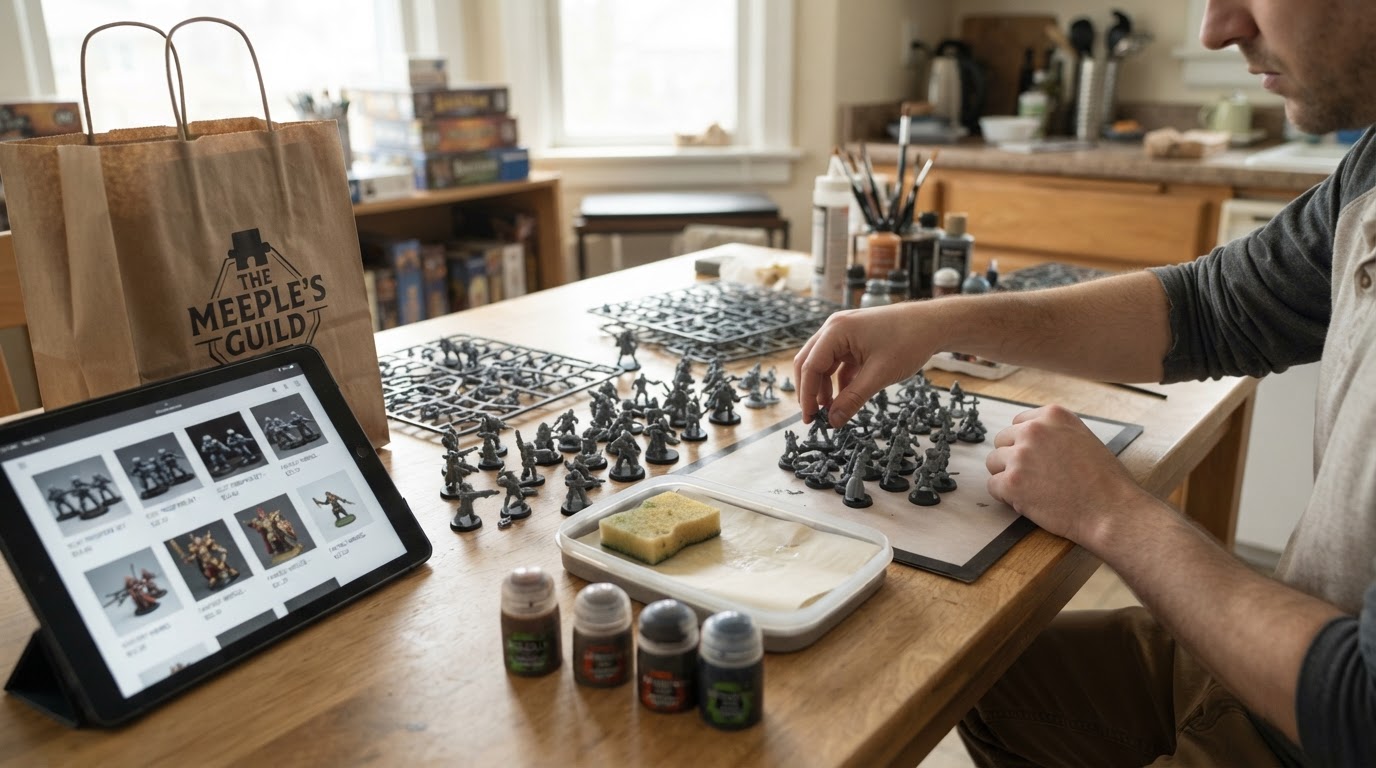
Before you compare stores, decide what you actually want the figures to do: fill a first squad for a tabletop game, sit on a shelf as a display piece you take your time on, or serve as a stack of practice figures you can ruin happily while you learn the brush. That single answer narrows your options faster than any price hunt, because the main buying channels are each good at a different part of the hobby.
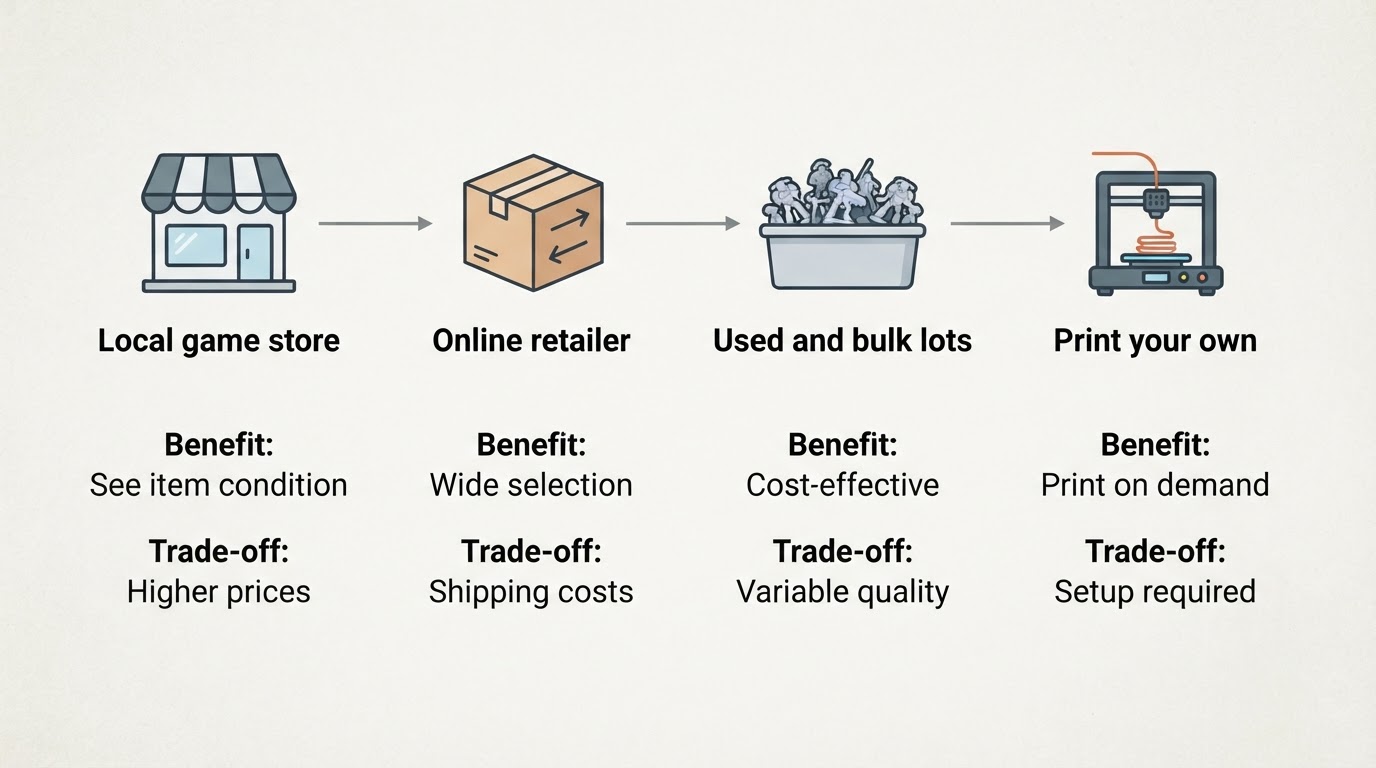
Channel | Best for | The trade-off |
|---|---|---|
Local game and hobby store | Judging scale in person, buying singles, advice from staff and regulars | Narrower stock, and restocks you cannot predict |
Online miniature retailer | Wide ranges, singles and unit boxes, preorders | Shipping time, packing risk on thin parts, listings that go stale |
Used and bulk marketplaces | Lots, older kits, a lower cost per figure | Condition homework, stripped paint, missing parts |
Printing your own | Exact poses, repeat copies, one-off characters | Printer setup, resin safety, supports and curing |
No single channel wins on its own. A local shop that stocks the exact range you play beats a bigger catalog you have to wait on, and a 3D printer only pays off if you enjoy the workflow around it.
Local Game and Hobby Stores: See the Scale Before You Pay
The biggest advantage of a local game or hobby store is physical: you can pick up a figure, compare it against the models you already own, and see how one heroic-scale line sits next to a true-scale historical one. That matters more than new painters expect, because two ranges sold under the same scale label can look noticeably different on the table.
Local shops also tend to be the best place to buy single figures rather than boxes. If you want one character to practice skin tones on, a staff member can usually point you to the loose or blister rack instead of a full unit. You also get advice you cannot get from a product page, and buying where you play keeps a table and a community in business.
The trade-off is stock. A small shop cannot carry every range, restock dates depend on distributors, and a popular release may sell out on launch day. Treat a phone call or a quick visit as the most reliable way to confirm what is actually on the shelf, and keep a short list of ranges you are hunting so the trip is not wasted.
Online Miniature Retailers: The Widest Catalog
Online hobby retailers exist for the gap between what a local shop can stock and what a specific project needs. They typically organize by manufacturer and range, which makes them the easiest place to find a particular unit, a replacement part, or a single figure from a line your local store does not carry.
When you shop online, judge the store less on the size of its catalog and more on the details around each listing:
- Is the scale and range stated on the product page, or do you have to guess from the photos?
- Does the listing say in stock, preorder, or backorder, and is that status dated?
- Are the figures plastic, resin, or metal? Resin and thin metal parts need more careful packing and more prep work.
- Does the box include bases, and is it a single figure, a unit box, or a starter set?
Shipping is where online orders usually go wrong. Thin weapons, banner poles, and spindly resin pieces are the parts most likely to arrive bent or broken, so check how a store packs orders and what it does when a figure arrives damaged. A replacement policy matters more than a marginally lower price.
Used and Bulk Marketplaces: The Best Value, the Most Homework
Marketplaces for used and bulk miniatures are where collections get recycled. Sellers list lots of partially painted figures, stripped models, convention exclusives, out-of-production kits, and boxes that were opened and never finished. Per figure, this is usually the cheapest way to buy in volume, and for a new painter who wants a pile of practice models it is hard to beat.
The homework is real, though. Used figures arrive in every condition from barely assembled to glued, primed, and missing a sword. Before you buy:
- Read the listing for what is included: bases, loose parts, and any missing pieces.
- Look at the photos for thick paint, glue haze, broken ankles, or putty repairs.
- Ask whether the model is plastic, resin, or metal, and whether it has been stripped.
- Check the seller's return terms. A lot sold as-is usually stays as-is.
Budget for cleanup. Stripping old paint and re-gluing parts is part of the price you pay for a bargain, and a figure that needs an hour of prep is not a bargain if you never get around to it.
Printing Your Own Miniatures: Exact Poses, More Setup
Printing your own figures is the channel that gives you the most control. You can scale a model to match a project, print a specific pose or a one-off character, and produce repeat copies of the same design without buying another box. Resin printers handle the fine detail that miniature faces and cloaks need, while filament printers suit terrain and larger pieces more than small figures.
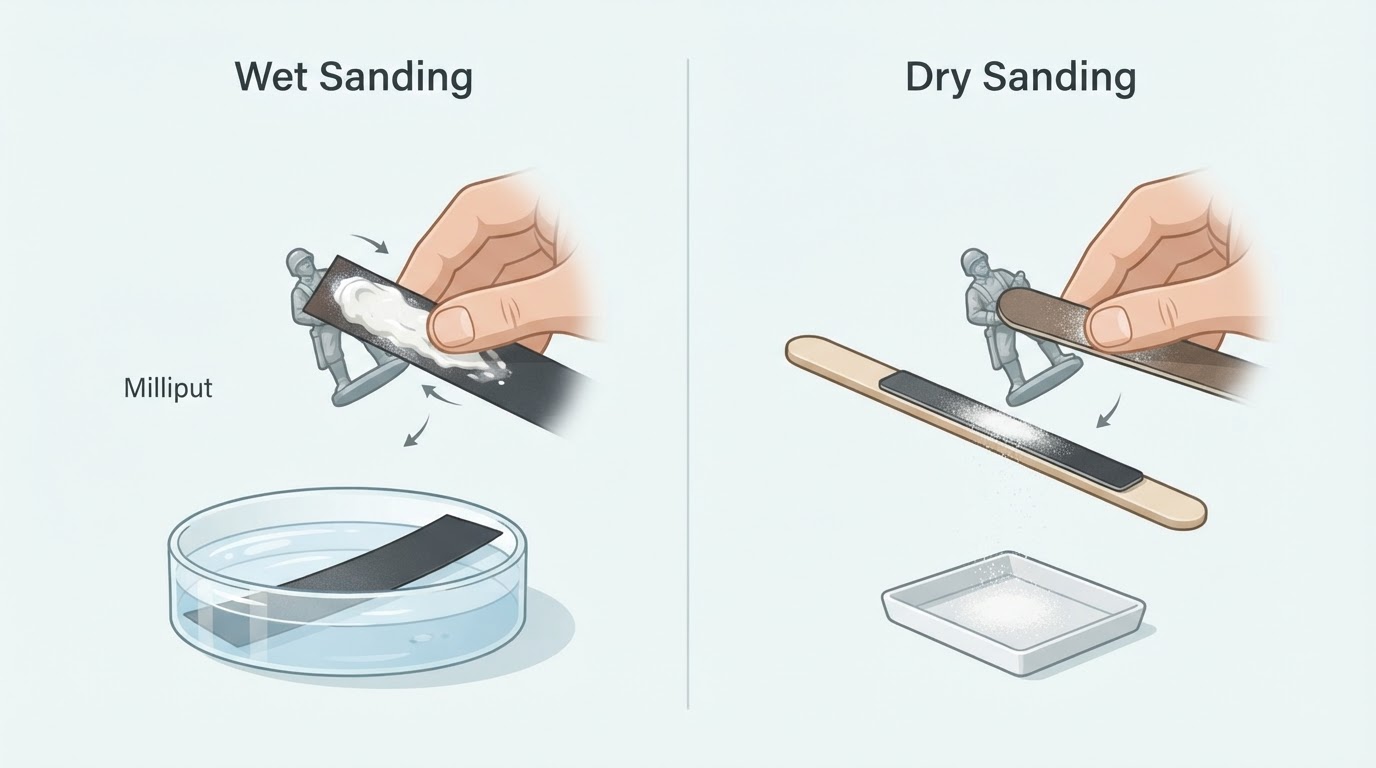
The cost is a workflow. You need to source files, check supports, print, clean, cure, and then treat the resin safely, and gloves, ventilation, and a proper cleaning routine are not optional. Printed parts also need the same prep as store-bought resin: support nubs removed, surfaces sanded, and the model washed before primer. If you already own a printer, this channel is close to free per figure. If you do not, the setup only makes sense when you plan to print regularly.
How to Judge a Store Before You Order
Most disappointing miniature purchases come down to a mismatch between what the listing promised and what the hobby actually needed. A store worth buying from makes those details easy to find. Use the same checklist whether you are standing at a counter or reading a product page:
- Scale and line compatibility: will these figures rank up with the army, warband, or collection you already have? Check the stated scale, the base size, and whether the range is heroic or true scale.
- What is in the box: single figure, unit box, or starter set; monopose or multi-part; bases included or sold separately.
- Material: plastic is forgiving and easy to glue; resin holds detail but is brittle and needs washing; metal is heavy and bends.
- Stock status: in stock, preorder, or backorder. Restock estimates are estimates, not commitments.
- Shipping and packaging: transit time, tracking, and how the store handles a figure that arrives damaged.
- Returns: can you send back an unopened box, and what happens with a broken part?
- Prep burden: mould lines, flash, gaps, and assembly. A cheap kit that needs three hours of cleanup is not cheap if your hobby time is short.
Verify Prices, Stock, and Scale Yourself
This is the part no article can do for you. Prices, inventory, and even the scale of a particular range change between the time a page is written and the time you read it, and hobby stock moves in waves around new releases. Treat every listing, including store pages you found through a search, as a snapshot rather than a promise.
Before you order, confirm three things at the source. Check the current price at checkout rather than in a cached snippet. Confirm the item is in stock, not just listed, and note whether it ships immediately or on a restock date. For scale, read the manufacturer's description of the range and compare it with what you already own; when a shop page is vague, ask the shop directly, because scale labels are used loosely across the industry. If you are buying in person, bring a model from your collection. It is the fastest scale check there is.
Common Mistakes That Cost New Painters Money
A few avoidable habits show up again and again:
- Mixing scales by accident, then discovering the new figures tower over the old ones.
- Buying prepainted models when the point was to paint, or buying unpainted when the plan was a table-ready army.
- Assuming a bulk lot is ready to prime. It usually needs stripping, re-gluing, rebasing, or all three.
- Underestimating prep. Mould lines, flash, and support marks are the difference between a project and a pile.
- Buying resin without a plan for cleaning and curing it safely.
- Reading "in stock" as "ships today." Preorders and backorders often look identical until checkout.
- Chasing a discount on a range you will not get to this year.
Your Next Step
Start with a small order that matches the material, scale and preparation work you checked above. Inspect the received figures against the listing before committing to a larger set.