Start with one box, not a shopping list
The mistake that ends most first attempts is buying a whole army, a paint range, and three rulebooks before rolling a single die. The working path is smaller: buy one box that gets you to a playable game, add the handful of tools you will use on day one, and let your first miniature teach you what you actually need next.
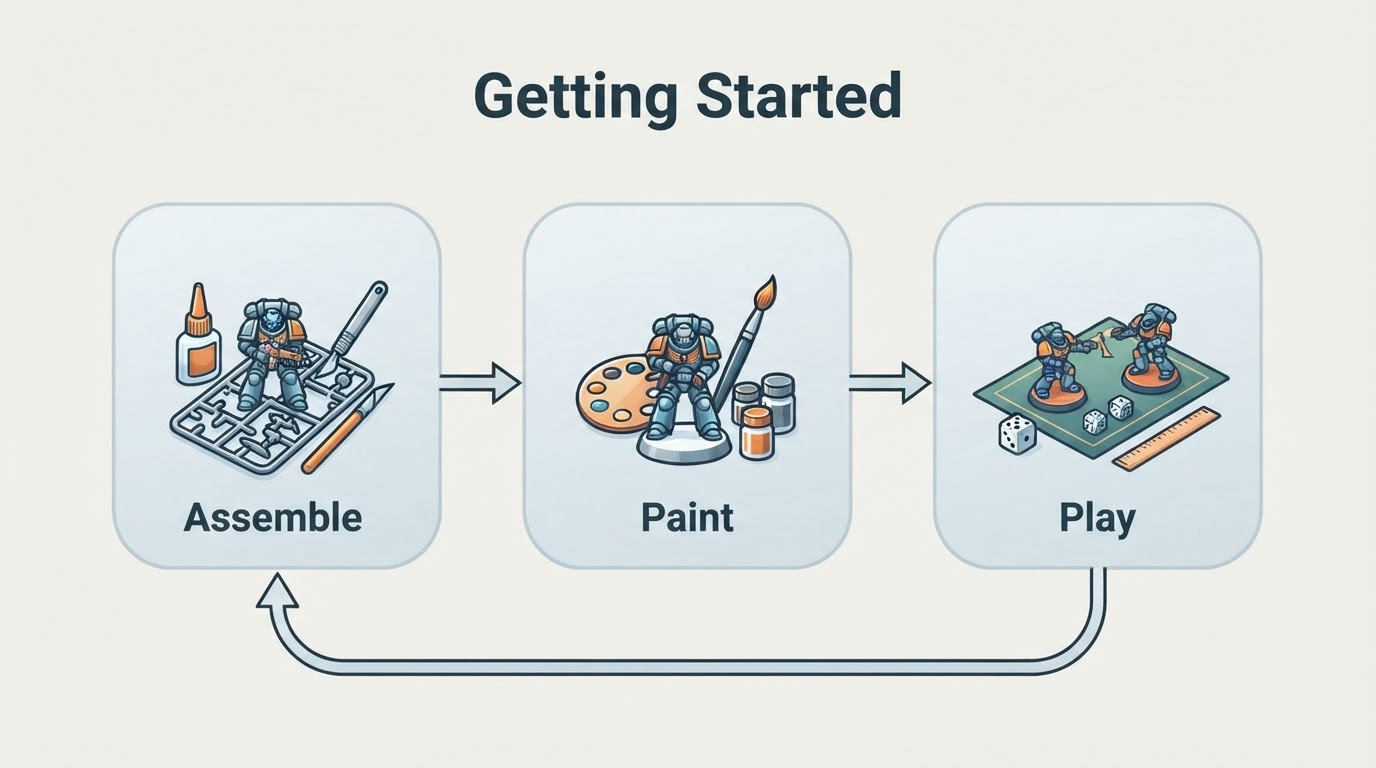
Here is the sequence that keeps beginners moving:
- Buy one starting box — an introductory set, a two-player starter set, or a single Combat Patrol-sized force. One purchase, one decision.
- Add the minimum kit — clippers, a hobby knife, plastic cement, a primer, a brush, and a small paint set. Nothing else.
- Assemble everything in one sitting. Push-fit miniatures need no glue at all, so this can be an evening.
- Paint to a finished tabletop standard, not to a competition standard. A base coat, a wash, a couple of highlights, and a based model is enough to play with pride.
- Play a small game — around 500 points, 45 to 90 minutes — as soon as the first unit is built. Rules stick when you use them.
Your completion checkpoint for the first month is simple: you can put a legal, assembled, mostly painted force on a table and finish a game without asking a stranger to walk you through every phase. Everything past that is optional.
Choose the on-ramp that matches how you want to start
The current edition gives you four honest entry points, and they answer different questions.
A two-player starter set is the right call if you have someone to learn with. The same July 11, 2026 announcement describes the Starter Set with 46 miniatures forming two Combat Patrol armies, plus 15 terrain pieces, a core book, and boards. Treat that as a dated example rather than a permanent contents list: check the current listing before buying, because box names and contents change between releases. One purchase, two players, no extra decisions.
An introductory set is the low-risk solo sampler. In Games Workshop's July 11, 2026 pre-order announcement, the Introductory Set is described with 12 miniatures, a playmat, card terrain, a ruler, six dice, six paints, a brush, and a 48-page handbook. Treat those contents as a dated example, not a promise about every introductory box or every future release: check the current product listing before you buy, then build and paint a few models and play the simplified scenario to decide whether the hobby is for you.
A faction Getting Started box suits someone who already knows which army they want. You get one small force, faction-matched paints, a brush, and an introductory booklet. It is the most efficient route if your heart is set, and the least useful if you are still deciding.
A two-model miniatures-and-paints set is the smallest possible step — a couple of push-fit models and a few paints. If you only want to find out whether painting relaxes you or bores you, start here.
Trade-off criteria for any starter box
Before you buy, check the box against five questions. They matter more than the discount.
Question | What a good answer looks like |
|---|---|
Does it contain a complete game? | Rules, dice, and enough models for two playable sides |
Does it match your goal? | Solo sampler, two-player game night, or one committed faction |
How much assembly does it need? | Push-fit models are ideal first; multipart kits mean more glue and time |
Does it include paints? | A small matched paint set saves a separate purchase on day one |
What will you still need? | Clippers and a primer are the two items starter boxes routinely omit |
A bigger box is not automatically better. The best first purchase is the smallest one that reaches your private goal — testing the hobby, playing with a friend, or committing to one army — because momentum matters more than value per dollar.
The tools and paints you actually need first
Beginners overbuy here more than anywhere else. Start with the essentials and let your own workflow tell you what is missing.
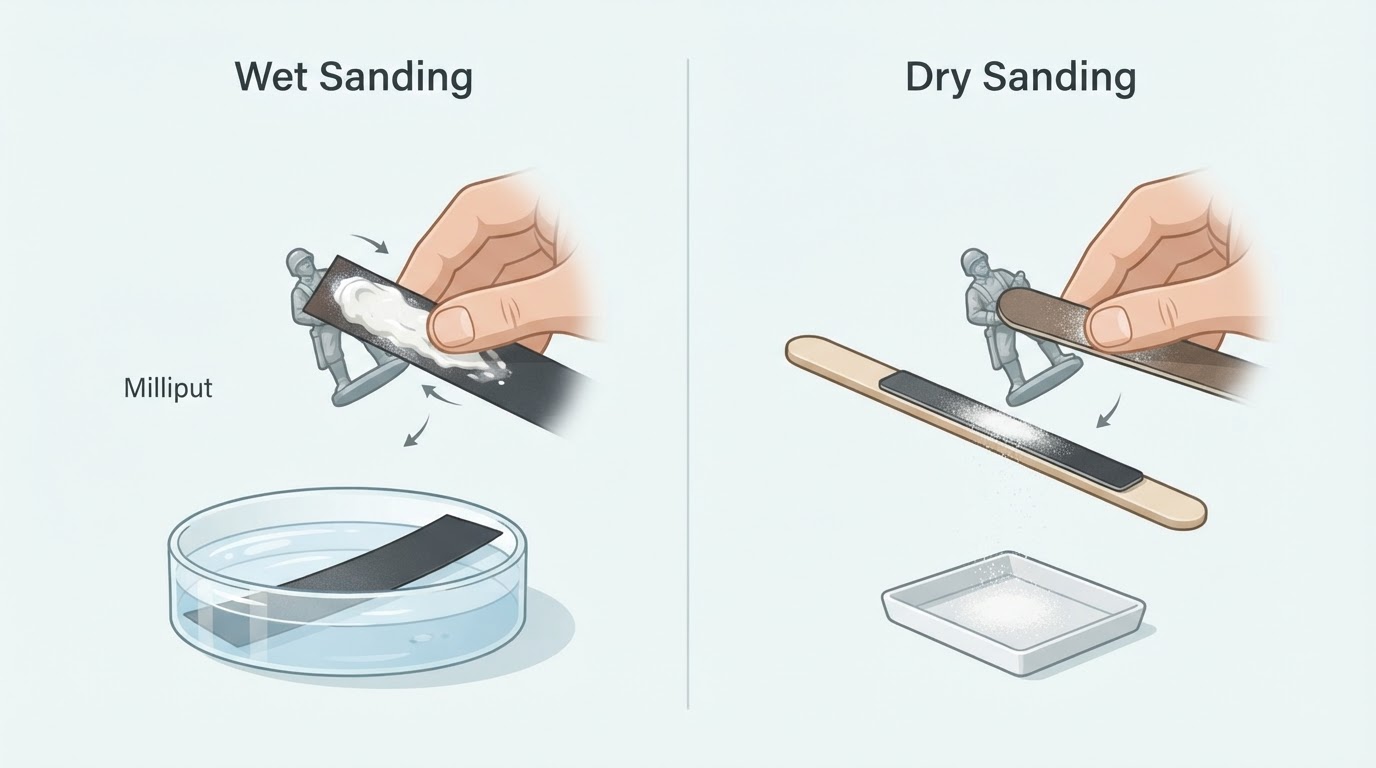
For assembly: a pair of clippers for freeing parts from the frame, a hobby knife for trimming the leftover nub, and a mould-line scraper for the thin ridges left where the mould halves met. For gluing, plastic cement handles plastic-to-plastic joins, while super glue is for metal, resin, basing, and already-painted parts. Push-fit miniatures in starter boxes need no glue at all, and a plastic cement join is a weld, so less is more. Getting started — Dakkapedia
For painting: a spray primer, a few base colours, one or two washes, and a small set of brushes — a medium workhorse, a detail brush, and a cheap brush you are happy to ruin with drybrushing. Synthetic brushes are the sensible first choice. Two thin coats beat one thick one every time, and a simple base-wash-highlight pass over a primed model already looks like a finished tabletop miniature.
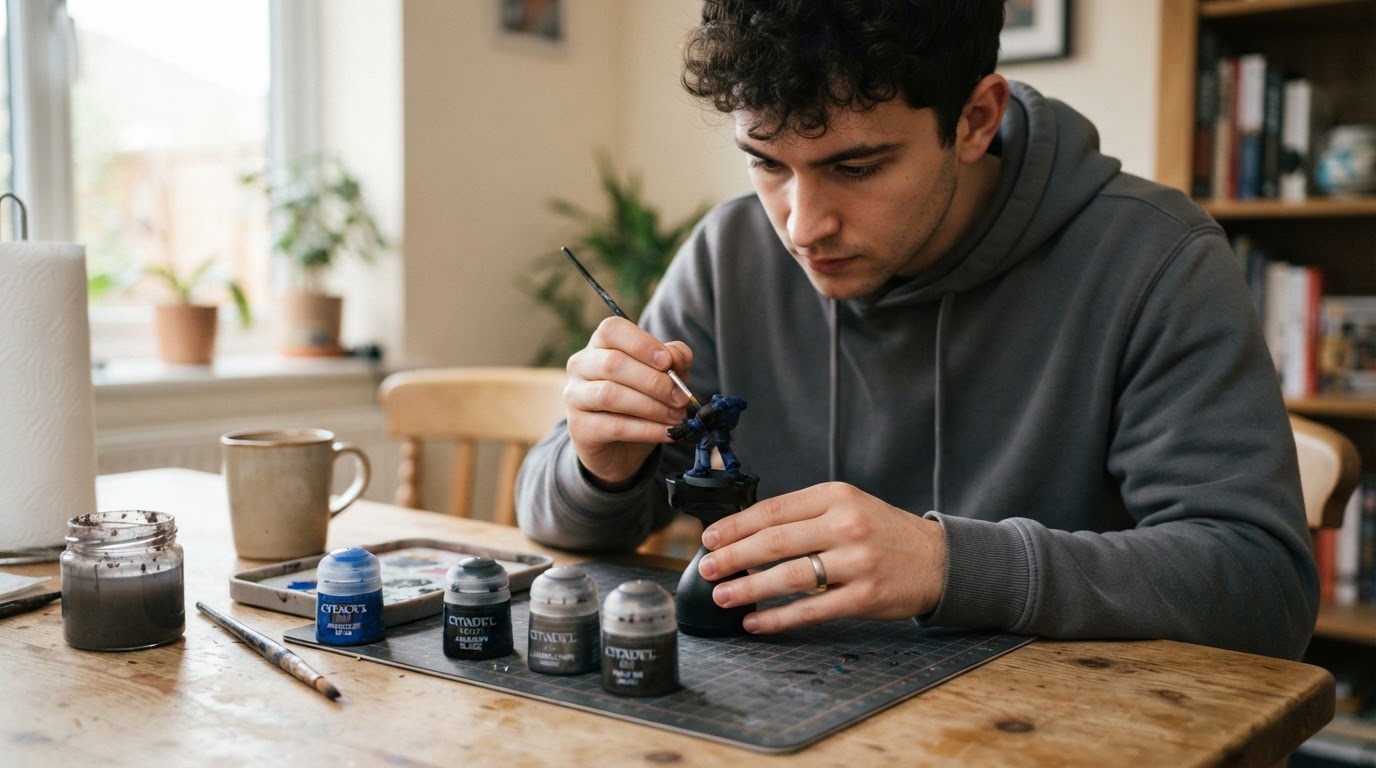
Sanity-check the money: bare-minimum hobby tools run about $35–55, and painting from zero lands around $80–85 for a paint-and-tools set, a spray, and an extra brush or wash. A Games Workshop starter paint-and-tools box bundles thirteen paints with a starter brush, clippers, and a mould-line remover, which is a tidy way to avoid buying brushes twice.
What can wait: an airbrush, a wet palette, expensive sable brushes, a magnifier lamp, and the full paint range. None of them make your first ten models better.
The right order: assemble, paint, then learn the rules
Doing these in the wrong order creates the classic beginner pile of grey plastic. Here is the order that works and why.
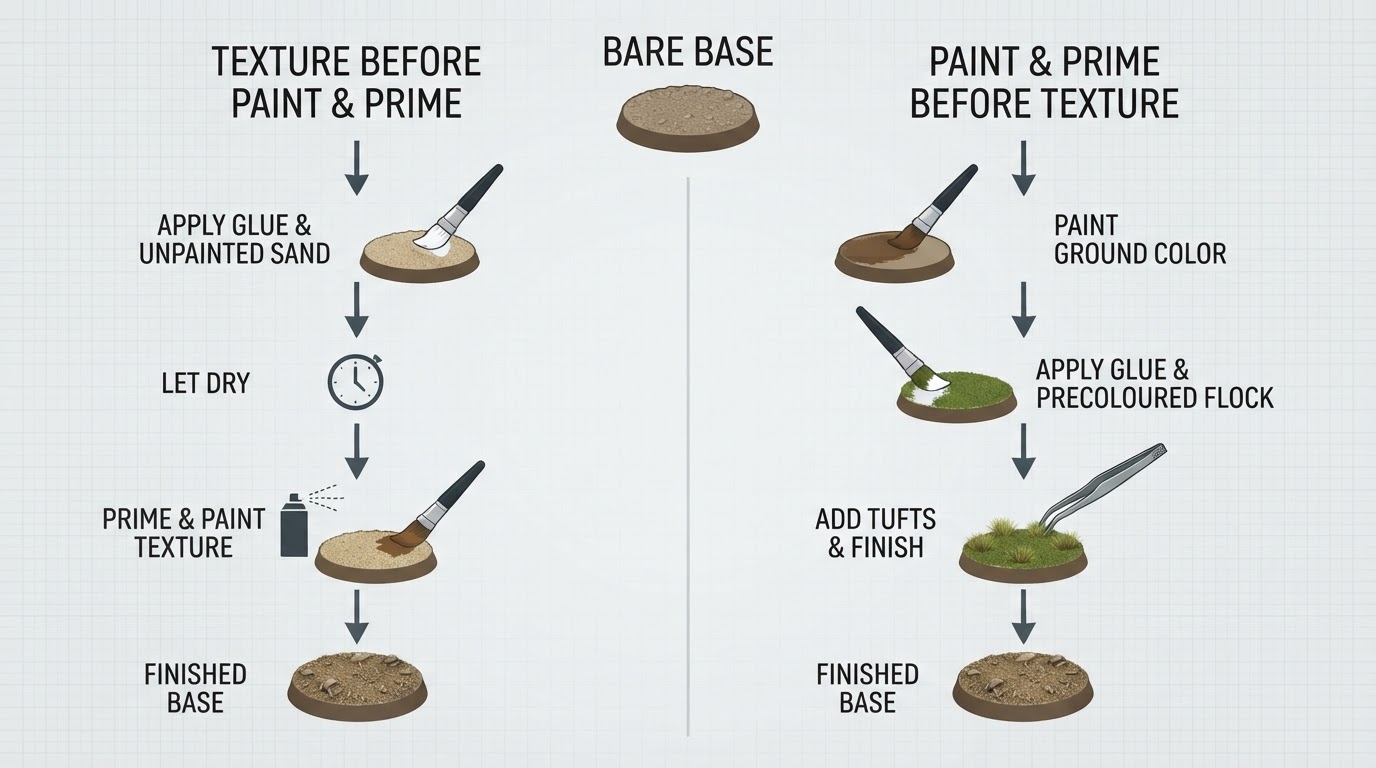
Assemble first, in sub-assemblies when a pose hides detail. Dry-fit before gluing, scrape paint off contact surfaces if you painted a part separately, and clean mould lines before priming rather than after. Base your models early — texture paint, a drybrush, and a painted rim turn a bare disc into a finished miniature. Standard push-fit models need no glue and are deliberately beginner-friendly; multipart kits allow more posing and customising but cost more time. Start push-fit, graduate later.
Paint second, and paint the same colour everywhere it belongs. Primer first, then your main armour colour over the largest areas, then a wash to add depth, then a lighter highlight on the edges. Two speed routes are worth knowing. Contrast-style paints basecoat, shade, and highlight in a single coat over an appropriate primer. The "slapchop" method primes black, drybrushes up to white, then lets that greyscale show through as built-in shadows under a layer of Contrast paint. Games Workshop's official entry-level standard is Battle Ready: main areas coloured plus a finished base, and community taste runs to at least three colours with no bare plastic. In 11th-edition matched play a Battle Ready army is reported to earn a small Victory Point bonus at the end of the game, but every model has to qualify — check the current Core Rules or Event Companion before you rely on it at an event.
Learn the rules last, in small bites, while playing. Do not read the rulebook cover to cover. Play the small scenarios included with a starter box or introductory set, because they introduce movement, shooting, and combat one at a time. The core rules are available free through the official Warhammer app, which also serves datasheets and Combat Patrol rules, and the full Core Rules are published as a free PDF on the Warhammer Community downloads page. Keep a quick-reference sheet beside you for the first few games and look up only the rule you are actually using.
Choose a first faction you will actually finish
Faction choice is not a permanent identity — it is a decision about what you will enjoy building and painting for the next few months. Weigh four things: how the army looks on the table, how it plays (durable and forgiving, fast and fragile, or a large horde), how many models it needs, and how easy it is to paint.
If you have no strong preference, start where the support is deepest. Space Marines are the default for a reason: durable, flexible, and surrounded by tutorials and starter products. Necrons are tough and forgiving to paint, and their reanimation rules bring destroyed models back, which softens early mistakes. Orks, T'au, Death Guard, and Tyranids also treat beginners kindly — through toughness, straightforward rules, or sheer numbers. Horde armies ask for a much bigger painting commitment, so check the model count before you fall in love with one.
Some factions are worth saving for later. Armies with layered rules, fragile elite units, or very punishing mistakes are more fun once you already understand the core turn. If a demanding faction is the one you truly love, buy a single small force rather than a full army, and accept that your first games will be learning games.
What a first game on the table looks like
Agree the game before you deploy: points limit, mission, terrain, and how competitive the game will be. Mismatched expectations cause more bad first games than rules mistakes do. Combat Patrol is the purpose-built on-ramp at roughly 500 points, played on a 44-by-30-inch board, and a game usually runs between 45 and 90 minutes.
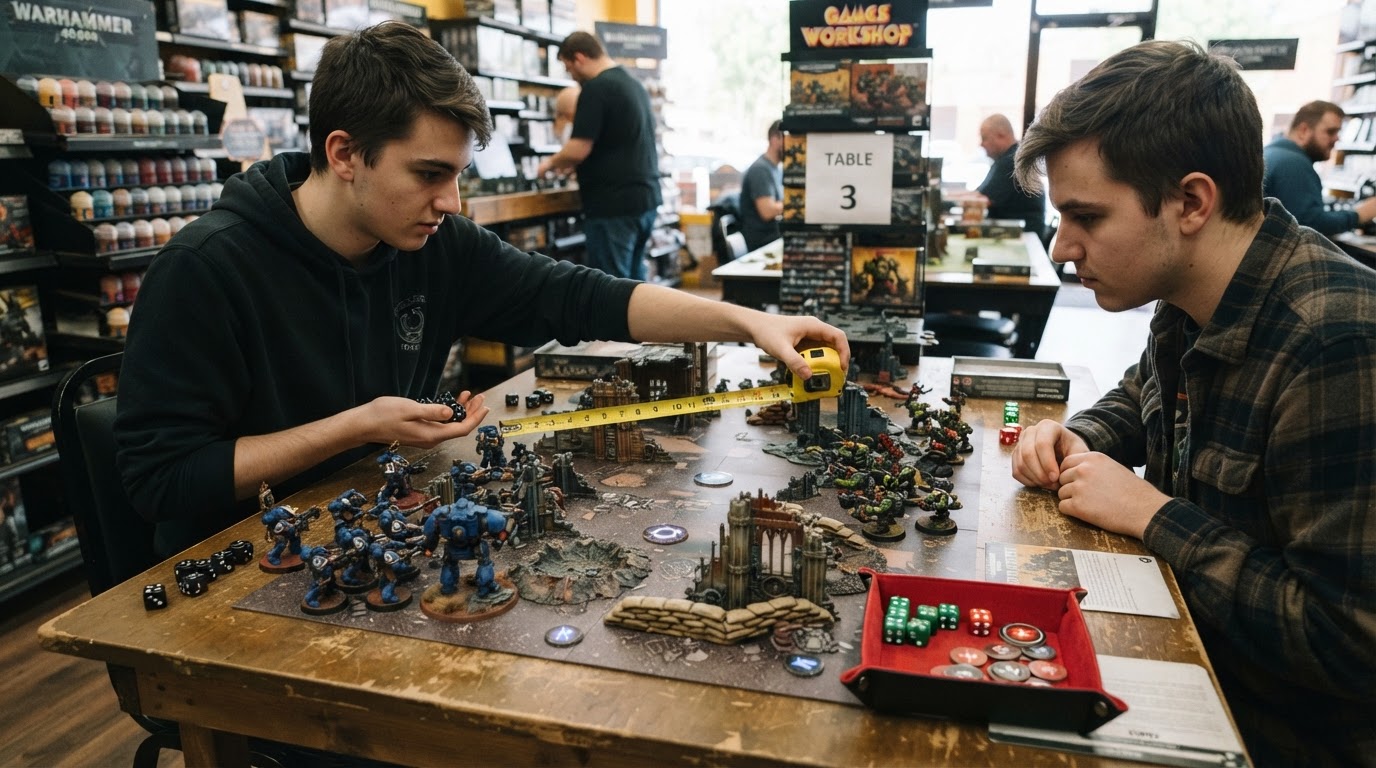
Then keep the table habits simple. Measurement is in inches, so bring a tape measure or a range ruler. Pre-measuring is allowed, so use it instead of guessing. Say what a unit is doing before you touch it, and declare what you are rolling for before the dice land. Models should represent their wargear; in casual games, proxies are fine as long as you tell your opponent up front, while tournaments expect the real model or an organiser's approval. Use dice or tokens to track wounds and Command Points so nothing is forgotten mid-turn, and plan your next turn while your opponent is playing rather than burying yourself in a rulebook.
If you have no opponent yet, that is not a blocker. Games Workshop stores run introductory and learn-to-play sessions and offer painting help, independent game stores often have larger gaming areas and regular communities, and local clubs give you the same faces every week. Say that you are new and people will adjust the pace for you.
Beginner worries, answered
"The lore and rules look enormous." They are — and you can ignore about 90 percent of both at first. Read the short lore section in your starter box, play the small scenarios, and look up individual rules as you meet them. Nobody expects a new player to know the setting's history or the full rulebook.
"Do I need to buy the rulebook and a codex?" No. The core rules and datasheets are available free through the official app, and the full Core Rules are also published as a free PDF on the Warhammer Community downloads page. Buy books when you want the lore, the artwork, or tournament-specific content.
"How much does starting really cost?" A realistic first-army figure works out to a single Combat Patrol-sized force at around $170, basic tools around $35–55, and paints, brushes, and primer around $80–85. If you begin with an introductory set or a two-model paint set instead, the entry price drops sharply.
"Can I play with unpainted models?" Yes, in casual games. Painting is a hobby goal, not a permission slip, and a grey army is normal in month one. Just remember the reported Battle Ready bonus applies in matched play only when every model in the army qualifies.
"What if I choose the wrong faction?" You have lost very little. Buy one small force, play a few games, and keep the models — they make excellent practice pieces, ready-made opponents for a friend, or the start of a second army later.
Resources worth bookmarking
- The official Warhammer app: free core rules, datasheets, Combat Patrol rules, and a built-in list builder.
- The Warhammer Community downloads page: the current free Core Rules PDF.
- Your local store or club: the fastest way to get a real teaching game.
- New Recruit, a free community list builder that is the current favourite for building army lists.
- A fan-maintained rules reference for quick "what is the rule right now?" lookups between games — useful, but cross-check points against the app before an event.
Warhammer 40,000 rewards a small start. One box, one evening of assembly, one honest paint job, one 500-point game: finish those four things and you are no longer someone thinking about the hobby — you are in it.
On-ramps for lore and video games
You do not have to play the tabletop game to enjoy Warhammer 40,000, and plenty of people never do. The setting is carried by novels and video games, and both are legitimate first doors.
For video games, pick by the kind of play you already enjoy rather than by canon. Strategy, squad-based action, and story-driven role-playing games all exist in the 40K universe, and most of them explain what you need as they go. Check the official Warhammer site or your platform store for what is currently available, and treat the game as a tour of the setting rather than a replacement for the tabletop rules.