Quick answer: where to find a miniature painting guide PDF
There is no single PDF that covers every paint range, scale and technique, but legitimate official and creator PDFs do exist. The practical answer is to choose the kind of guide that fits how you already paint: beginners can use a short official painting lexicon, community guides, creator-published PDF tutorials, and publisher or retailer guides. The right pick is the one that matches your paints and miniatures.
- Cheapest start: a free community project guide that covers one model from prep to varnish.
- Match your paints: a guide written for the paint range you own, or one that explains equivalents instead of naming colors you cannot buy.
- Structured practice: a paid creator PDF pack with step-by-step photos and exercises.
- Brand-specific basics: publisher or retailer guides, useful when you own their starter set.
- Watch out: availability changes, and not every PDF shared in a forum is a legitimate copy. Prefer the creator's own page or the publisher's own distribution.
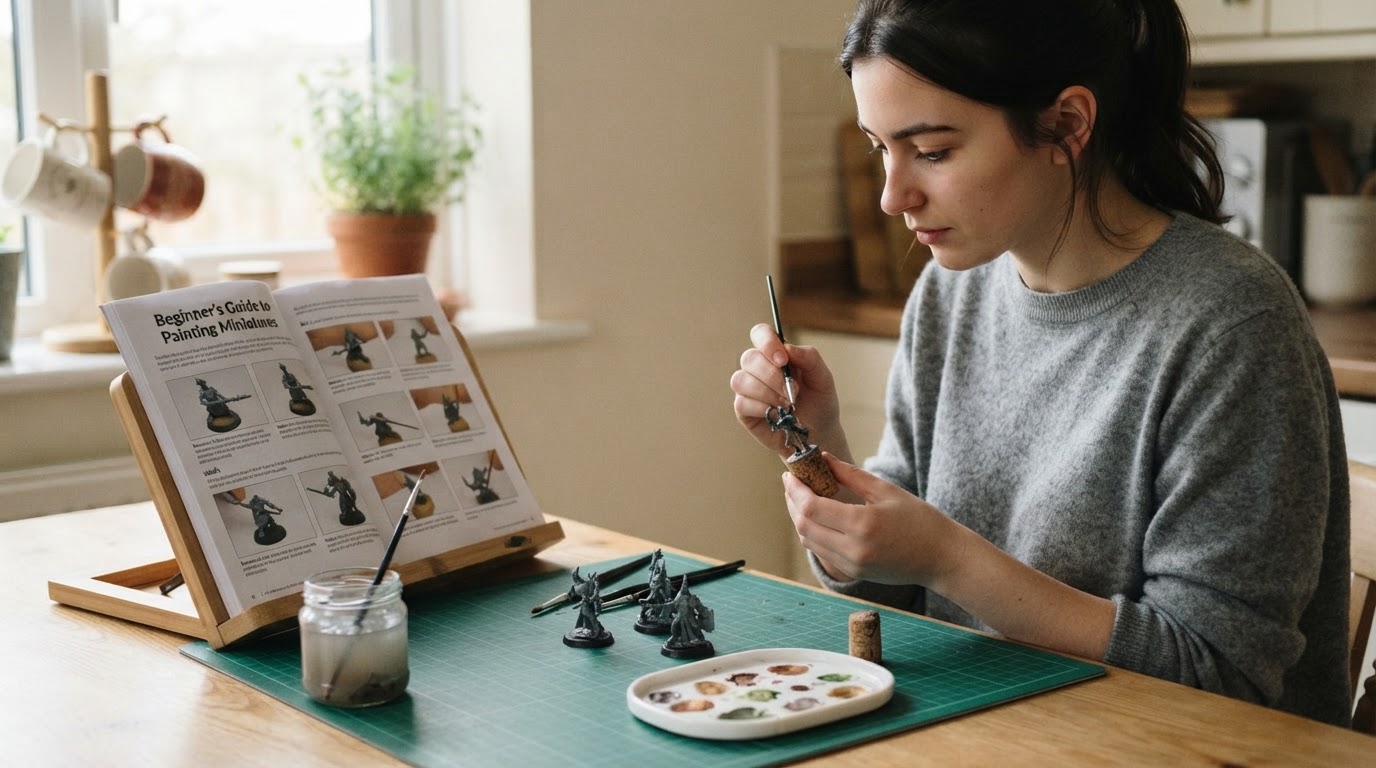
A small setup is enough, because what separates a finished model from a shelf of grey plastic is following one guide to the end. You do not need a dedicated hobby room or an expensive setup to start.
What makes a good miniature painting guide?
A good guide starts where you are, uses supplies you actually own, and shows what each step should look like before you try it. Everything else is presentation.
Judge a guide on these points before you spend an evening with it:
- Scope matched to your level. A first-model guide should explain its terms, not assume you already know what thinning to a smooth, watery consistency means.
- Paint-range compatibility. Guides written around one company's range use that range's names and pots throughout. That is fine if you own them; if you do not, look for a guide built on your paints.
- Photo quality and consistency. Ideally the same model, the same light and one photo per stage. Photos taken under different lamps hide color shifts you will meet later.
- A visible finished result. If the guide never shows the completed model under neutral light, you cannot tell what you are aiming for.
- Explanation, not just commands. Apply a second thin coat is a command. Apply a second thin coat because the first is still showing primer teaches you how to judge coverage.
- Prep and finishing included. Some guides begin at the first basecoat and end after highlighting, quietly skipping mold-line cleanup and varnish.
- A date or edition. Paints get reformulated and ranges get renamed, so an undated guide is a gamble.
Page count is not a quality signal. A twenty-page guide with one clear photo per stage beats a hundred-page scan with no visual checkpoints, and the long one is much harder to follow at a hobby desk.
Free versus paid miniature painting guides
Free guides are the best way to learn the core workflow, and paid packs are the best way to practice a specific technique or project. Neither type is automatically better, and there is no rule against using both.
Free options include community-written guides, blog posts that include a downloadable PDF, and the painting guides publishers and retailers hand out with starter sets. They cost nothing, they are easy to replace when a link dies, and many cover the whole first-model process in a single document.
Paid options are usually short, focused PDF packs sold by individual painters or small studios. You are paying for the photography, the testing and the specificity: one model, one scheme, one paint range, with every step shown.
The trade-offs are straightforward:
- Free guides tend to be general. They may be several years old, and the author may never update them.
- Paid packs are usually more current and more precise, but you buy them blind. Check whether the preview pages show the level of detail you need before paying.
- Publisher and retailer guides are free but brand-specific. A guide written for one company's paint range names that company's colors throughout. The order of steps transfers to other ranges; the exact names and mixes do not.
- Availability changes. Community PDFs disappear when a site closes, and creator stores open and close. Download the files you rely on and keep a note of where you got them.
One practical compromise: learn the method from a free guide, then buy a single paid pack once you have settled on a paint range.
Two guide formats worth opening first
A six-page official painting lexicon. Games Workshop's White Dwarf Bunker Hobby Hangout PDF is a short terminology and technique reference, not a full beginner assembly book. Across its six pages it explains the difference between technique and result, covers spray, airbrush, layer, wash, recess wash, drybrush, overbrush, edge, pin, zenithal and glaze work, and defines paint roles, mediums, and the Battle Ready versus Parade Ready standards. Page 5 describes Contrast Medium for making Contrast paint more translucent. Read it when you need the vocabulary or a quick check on what a step is meant to achieve. Open the PDF.
A free painter's book from its publisher. The painting-miniatures.com free-book page names Miniature Painting Made Easy by Angel Giraldez, published by Redgrass, and provides a FREE DOWNLOAD link to the publisher. The newsletter sign-up is separate from the book offer. That publisher landing page is the supported route to the free book and the place to confirm the current file and terms. Open the publisher's page.
Neither is a universal reference for every paint range. Use the checks above before you commit an evening to one.
What a beginner guide should cover
A complete beginner guide follows one model from sprue to sealed finish, in the same order you will actually work. If a PDF stops after highlighting, it is a technique guide rather than a full beginner guide.
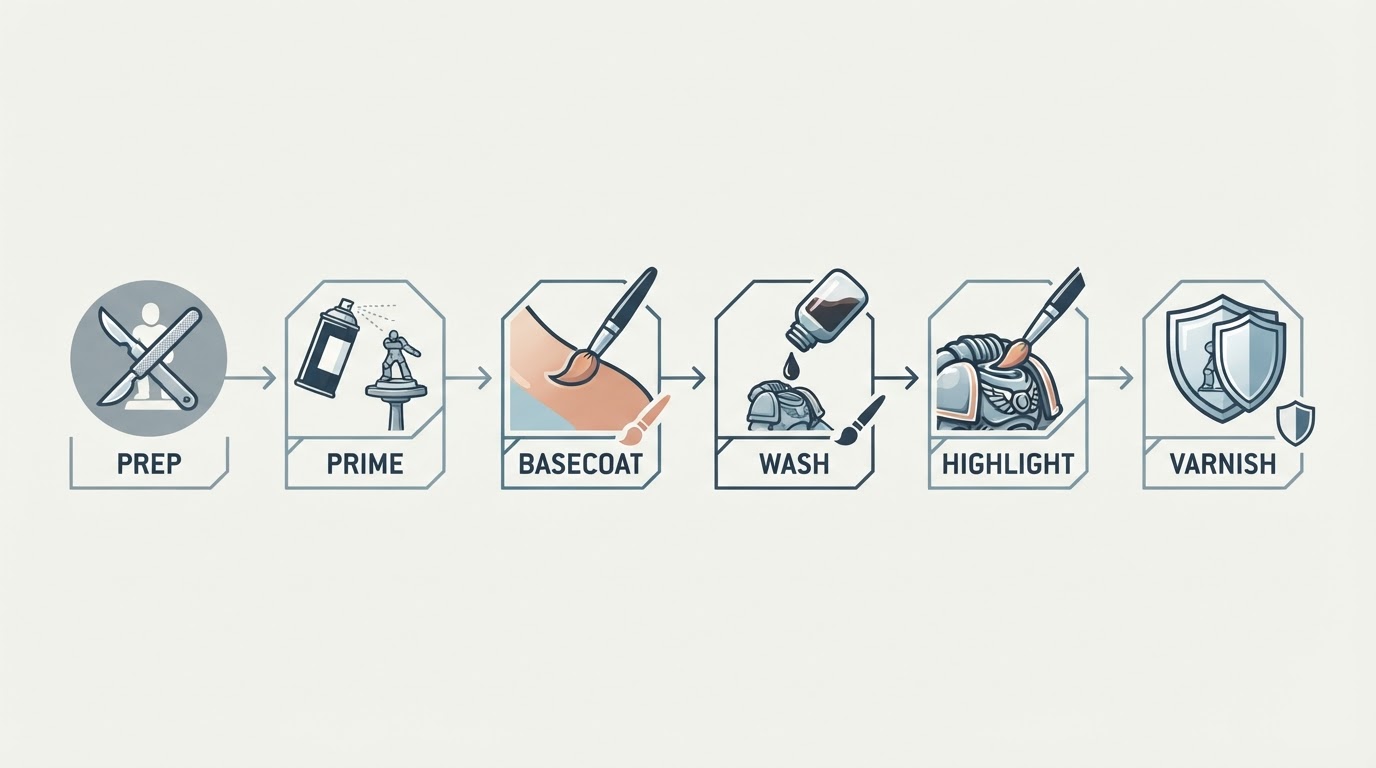
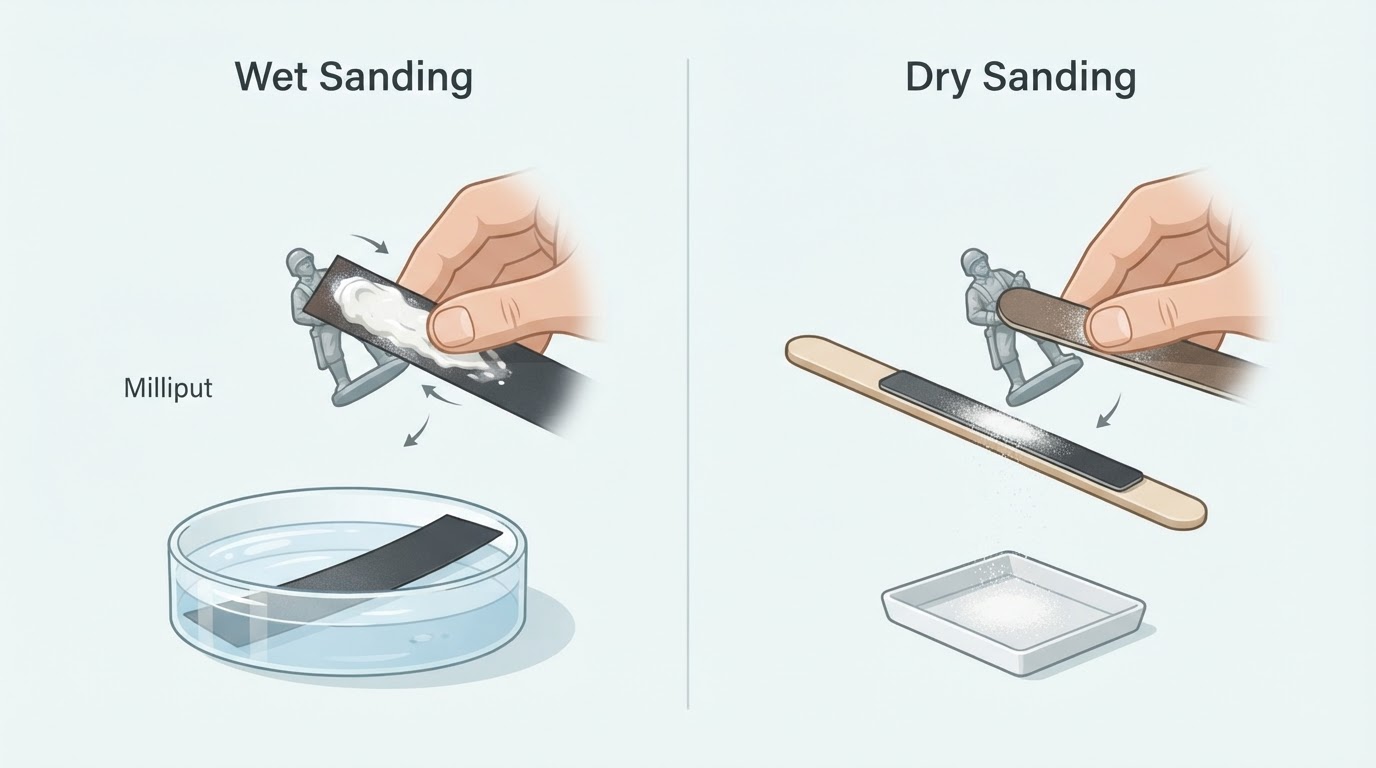
Prep. Remove mold lines, scrape and sand where needed, wash the parts to remove release agent, then assemble. If you work with resin, follow the manufacturer's safety guidance for dust and ventilation instead of improvising.
Priming. One thin, even coat that covers without filling detail. A guide should show what an over-primed model looks like, not only a perfect one.
Basecoats. Flat colors blocked in cleanly, generally in two thin coats rather than one heavy one. Watch for advice on which areas to leave for later.
Washes and shades. A wash flows into the recesses to create depth. A good guide says how much to load the brush and what to do about pooling on flat surfaces.
Highlighting. One or two lighter steps on the raised edges, either layered with a brush or drybrushed. This is where beginners usually need the most visual guidance.
Varnish. A protective coat, matte or satin, applied in thin passes. It is also the step that is easiest to skip and the one that protects everything you just painted.
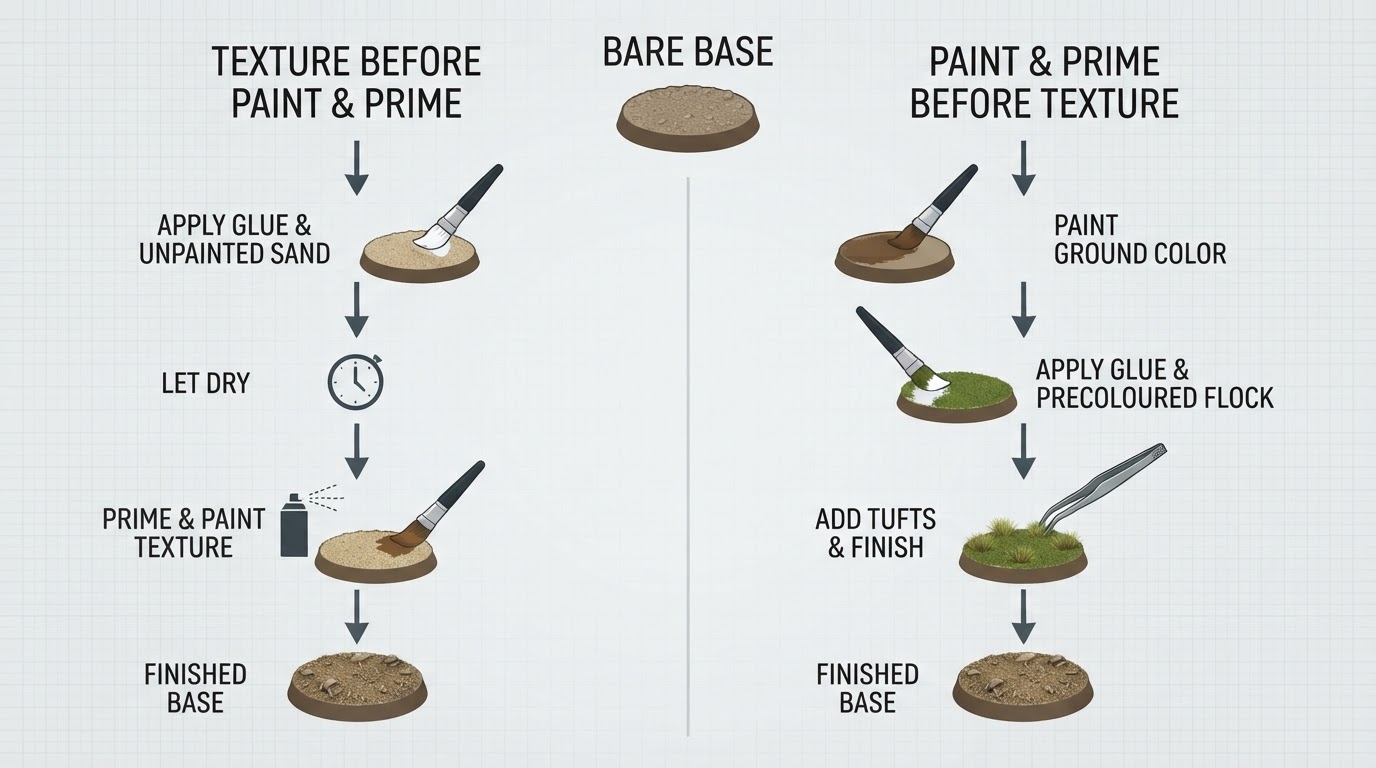
Basing. Optional but common: texture, paint and a rim color that frames the model.
If a guide covers all seven, it will carry you through your first several models. Anything beyond that, such as glazing, blending, weathering or non-metallic metal, belongs in an intermediate guide you can grow into.
How to follow a PDF alongside video tutorials
Use the PDF as the plan and the video as the correction layer. The document gives you the order and the paint choices, while a video shows the hand movement that text cannot describe.
In practice:
- Read the whole PDF once before you pick up a brush. You want to know where the guide is going and whether it covers prep, basing and varnish.
- Work one step at a time. Keep the PDF open at the stage you are painting and resist reading ahead while paint is drying.
- Watch a video for the technique, not the project. Thinning, loading a brush, drybrushing and applying washes are the four skills worth seeing in motion. Find a short clip, watch it once, then return to the PDF.
- Practice on scrap first. Test the consistency and the color mix on a spare base or a piece of sprue before committing them to the model. This one habit prevents most ruined first attempts.
- Write down what you actually did. Paint names, mix ratios and number of coats. Your own notes become the most useful guide you will ever own.
- Stop switching sources. Guides disagree, and both can still be right. Pick one approach and finish the model with it.
Common mistakes when using a miniature painting guide PDF
The most common mistake is collecting guides instead of finishing models. A folder of twenty PDFs teaches you less than one completed model followed from prep to varnish.
Other frequent problems:
- Painting with a guide for paints you do not own. Either buy the equivalents or find a guide written for your range. Improvising mid-project usually means the model stalls.
- Following a display-level guide on a beginner's timeline. Display guides assume brush control, more paints and far more hours. A beginner guide is allowed to look like a beginner result.
- Printing everything. A hundred printed pages is a filing problem rather than a plan. Print the checklist pages and keep the rest on a screen.
- Skipping the parts the guide delegates. If the first sentence says to clean the model as usual, the guide is assuming a step you may never have done.
- Jumping between guides mid-model. Consistency in your own choices beats a perfect recipe you abandoned at the basecoat stage.
- Forgetting that a PDF cannot answer back. When a step is unclear, a two-minute video or a question in a hobby community is faster than re-reading the same paragraph.
Frequently asked questions
Is there an official miniature painting guide PDF?
No single official one. There are guides published by paint and miniature companies for their own products, plus many community and creator-made PDFs. None of them is the definitive reference, which is why matching a guide to your paints matters more than finding a famous one.
Are free miniature painting guide PDFs worth downloading?
Yes, for the core workflow. Check three things first: whether the guide is dated, whether it shows a finished result, and whether it uses a paint range you own or can substitute. A free guide that passes those checks is easily worth an evening.
Can I use a guide written for a different paint range?
Yes. The order of work and the techniques transfer between ranges. The exact color names, coverage and mixes do not. Match by the visual result the guide shows, and expect to adjust your equivalents by eye.
Should I print a PDF guide or read it on a screen?
Use a screen or tablet at the hobby desk so you can zoom into step photos, and print only the checklist or supply pages you want beside you. Paint and paper do not mix well.
Does a longer guide mean a better guide?
No. Length says nothing about usefulness. A short guide with one clear photo per step and an honest finished result will beat a long document that describes techniques without showing them.